Hexagram 27 The Corners of the Mouth (Nourishment) Explained | I Ching

I Ching Hexagram 27 The Corners of the Mouth (Nourishment) explained. Full analysis of judgment, image, six lines, and divination guidance.

Hexagram Overview

Hexagram Text

Perseverance brings good fortune. Pay heed to the providing of nourishment and to what a person seeks to fill his own mouth with.

Image Commentary

At the foot of the mountain, thunder: The image of Nourishment. Thus the superior person is careful of his words and temperate in eating and drinking.

Hexagram 27 The Corners of the Mouth (Nourishment) — Hexagram Diagram

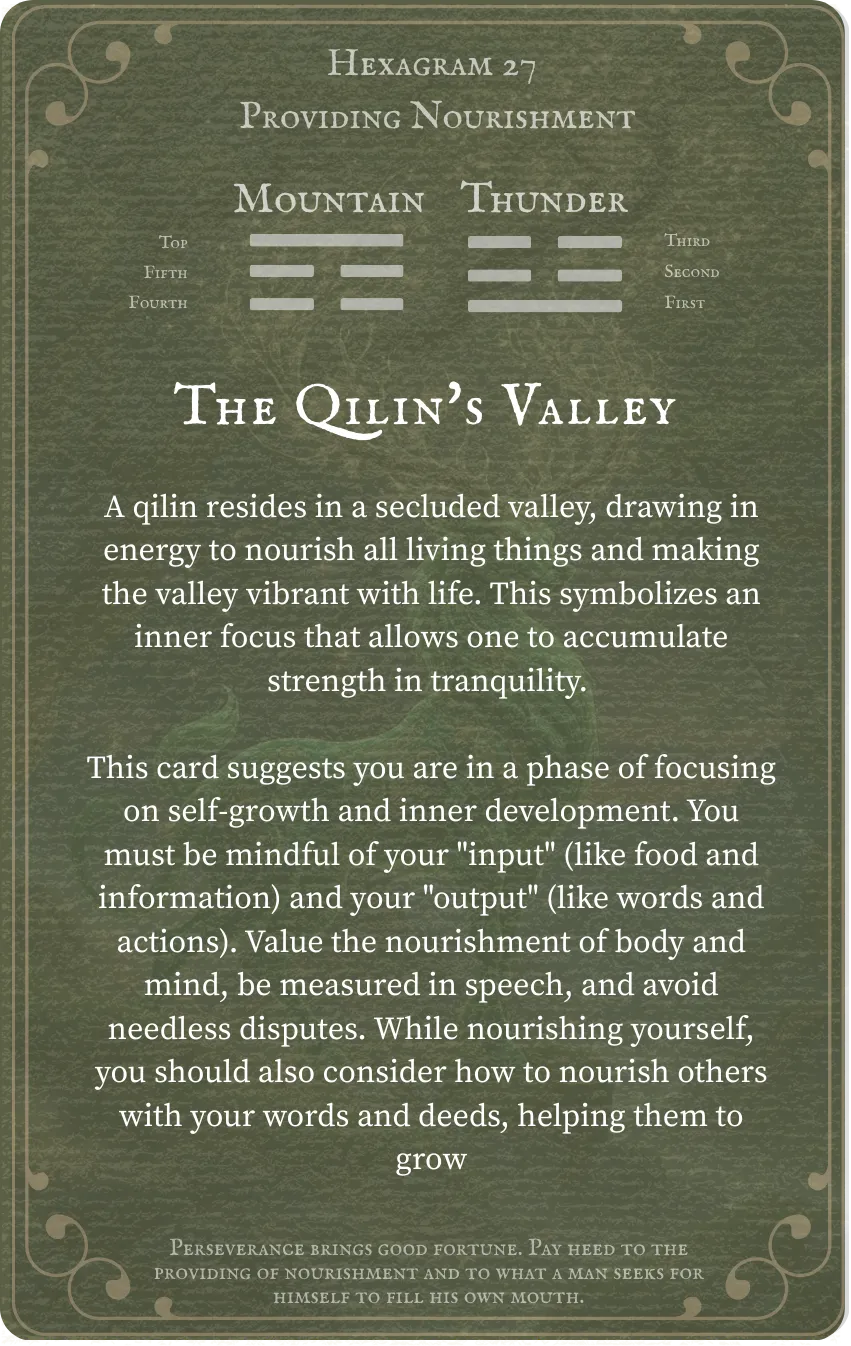
Hexagram 27 is the twenty-seventh hexagram of the I Ching, with the upper trigram Gen (Mountain) and the lower trigram Zhen (Thunder). The mountain rests above, thunder stirs below — evoking the image of a mouth: the upper and lower jaws with movement between them. This is the hexagram of nourishment in all its forms: what we take in through the mouth (food and drink), what we express through it (words), and more broadly, how we nourish body, mind, and spirit.

The character "Yi" depicts a jaw and chin, representing the mouth and the act of nourishing. The hexagram's image — mountain above, thunder below — shows stillness containing movement, like jaws chewing. The two yang lines (First Nine and Nine at the Top) form the lips, while the four yin lines between them represent the empty mouth, ready to receive.

The Judgment: Perseverance brings good fortune. Pay heed to the providing of nourishment and to what a person seeks to fill his own mouth with.

The Judgment instructs us to observe carefully: what do we nourish ourselves with, and what do we nourish others with? Physical food sustains the body; words and ideas nourish the mind; virtue and wisdom nourish the spirit. A person's character is revealed by what they choose to take in and give out. "Perseverance brings good fortune" — only sustained, principled nourishment leads to lasting well-being.

The Image: At the foot of the mountain, thunder. Thus the superior person is careful of his words and temperate in eating and drinking.

The mountain stands still while thunder moves below — the superior person emulates this by exercising restraint in speech (the mountain's stillness) while being mindful of nourishment (the thunder's vitality). Being "careful of words" means speaking only what is true and beneficial; being "temperate in eating" means taking in only what truly nourishes.


Yilore Reading

Nourishment — The Qilin Guards the Hidden Valley

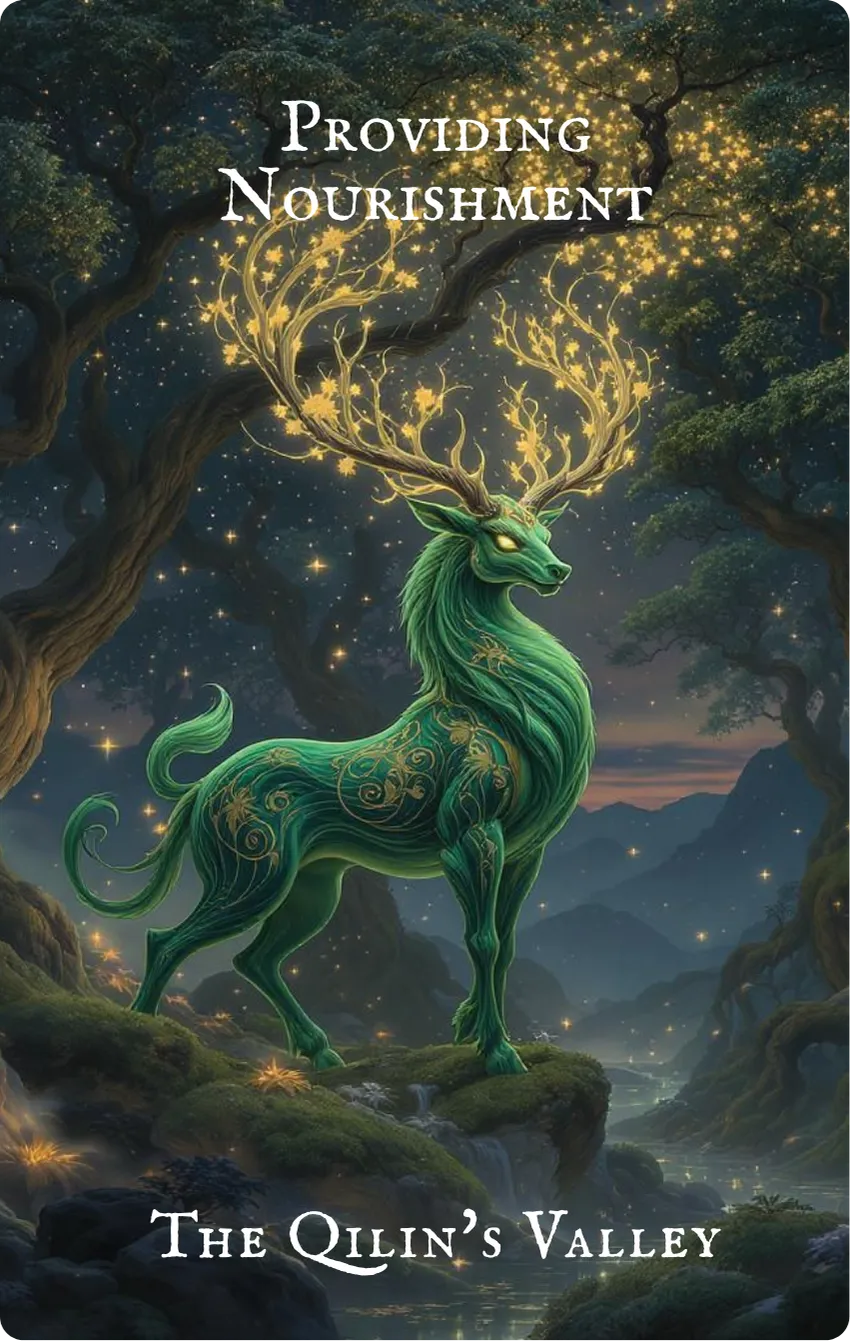
Hexagram 27 The Corners of the Mouth (Nourishment) — Card Front
Hexagram 27 The Corners of the Mouth (Nourishment) — Card Back

In a hidden valley shrouded in mist, the Qilin — the sacred beast of benevolence — guards the springs and orchards that sustain all life within. The Qilin does not consume recklessly; it steps carefully to avoid crushing insects, eats only what grows naturally, and shares the valley's bounty with all creatures.

This card speaks of nourishment at its deepest level. The Qilin teaches that true nourishment is selective, mindful, and generous. What you take in — food, words, ideas, relationships — shapes what you become. The Qilin's power comes not from what it consumes, but from the purity and intention with which it nourishes itself and others.

The hexagram's central question is one of the most penetrating in the entire I Ching: "Pay heed to the providing of nourishment and to what a person seeks to fill his own mouth with." Observe what a person feeds on — both literally and figuratively — and you will know their character.

At this moment, the card invites you to examine your own nourishment: Are you feeding your best self or your worst impulses? Are your words nourishing others or depleting them? Are you seeking substance or mere stimulation?

The Qilin's way is the way of mindful nourishment: choose carefully, consume temperately, and share generously. This is the path to lasting vitality.

Divination Insights

Hexagram 27, Nourishment, speaks to what you take in and give out — physically, mentally, and spiritually. It calls for careful attention to the quality of your nourishment in all areas of life.

Career

Career

Nourishment in career matters emphasizes feeding your professional growth with the right inputs: quality mentorship, genuine skill development, and meaningful work. Avoid chasing empty status or superficial rewards. Build substance. Be careful what professional 'food' you consume — gossip, shortcuts, and politics will poison your career. Seek roles that nourish your growth and allow you to nourish others.

Love

Relationships

In love, Nourishment asks: what are you feeding this relationship? Genuine care, honest communication, and mutual support create lasting bonds. Jealousy, dependency, and empty words starve it. Be mindful of emotional nourishment — both what you give and what you seek. A healthy relationship nourishes both partners' growth.

Wealth

Wealth

Financially, Nourishment counsels sustainable wealth-building over quick gains. Invest in what truly nourishes long-term prosperity: education, skills, relationships, and sound financial habits. Avoid speculative 'junk food' investments that promise quick returns but lack substance. Temperate financial habits lead to lasting abundance.

Health

Health

Health is the most literal application of this hexagram. Pay careful attention to what you eat and drink. The Image's advice is direct: be temperate in eating and drinking, careful in words. This extends to all inputs: food, media, social environments, and thought patterns. Nourish your body with whole foods, adequate rest, and moderate exercise. What you take in becomes what you are.

Line-by-Line Reading

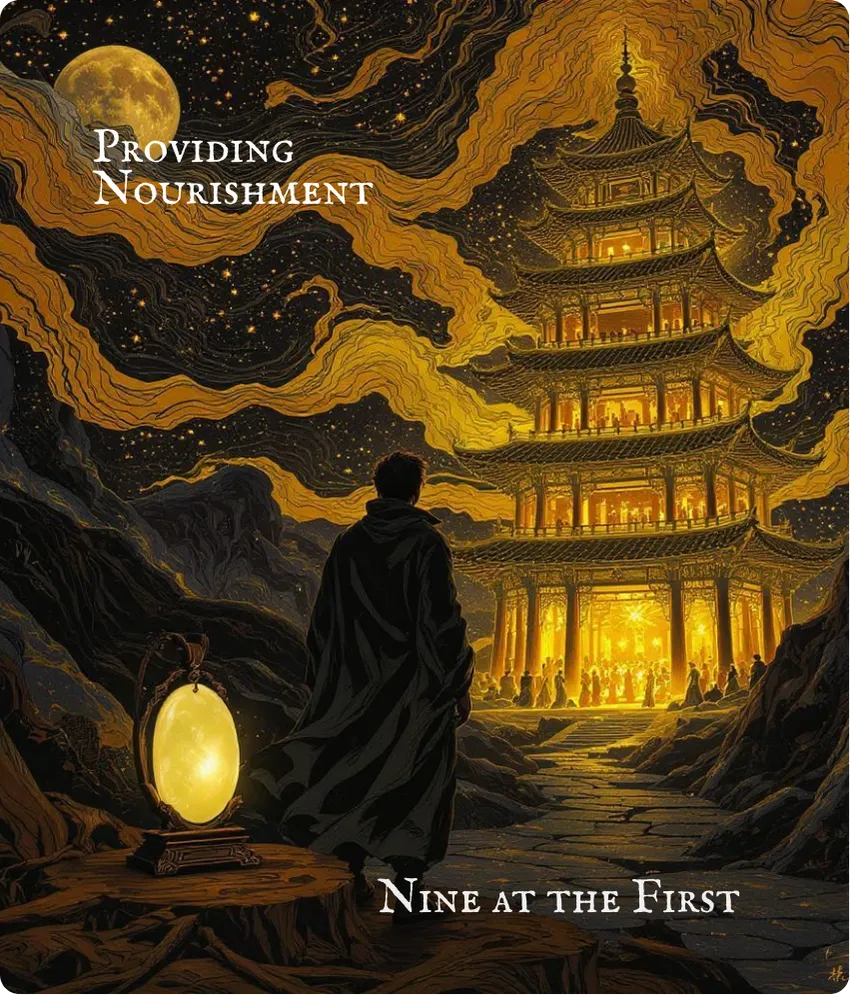
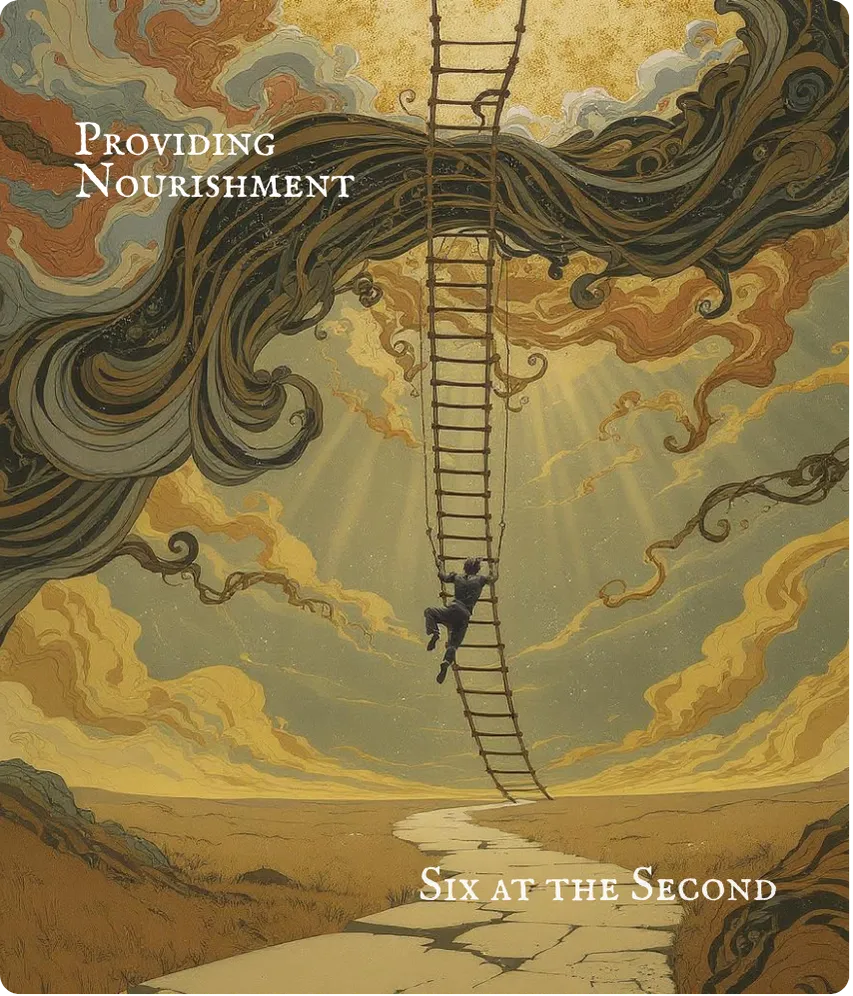
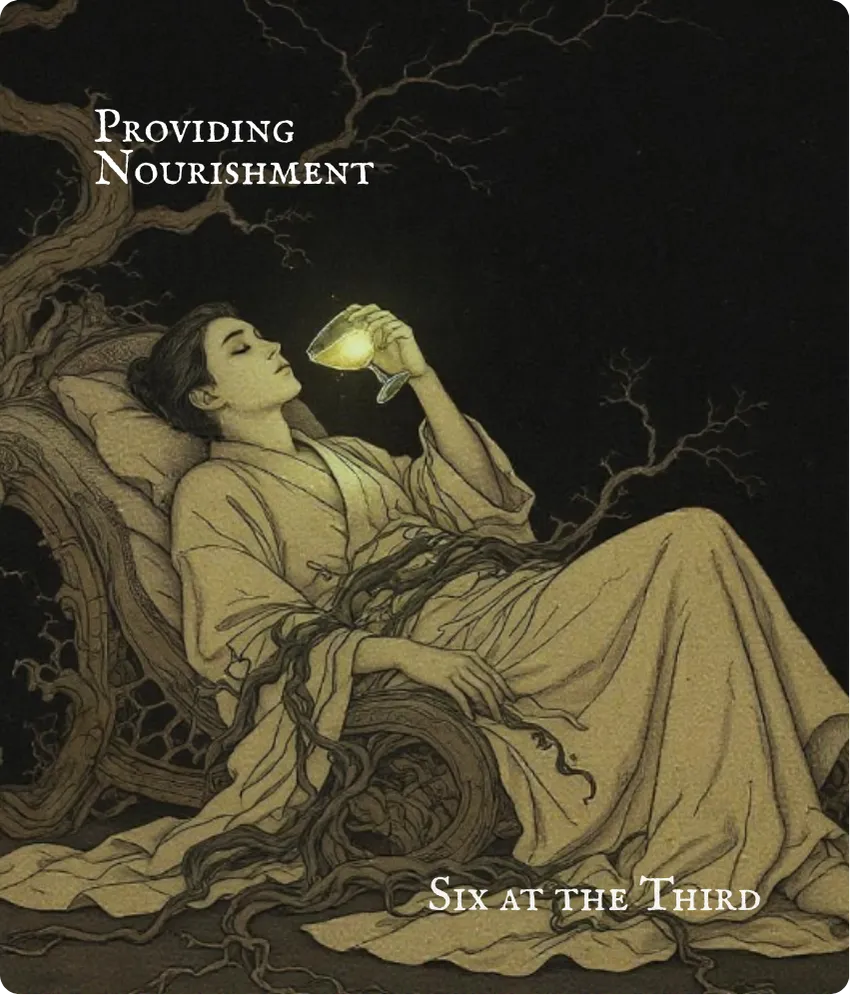
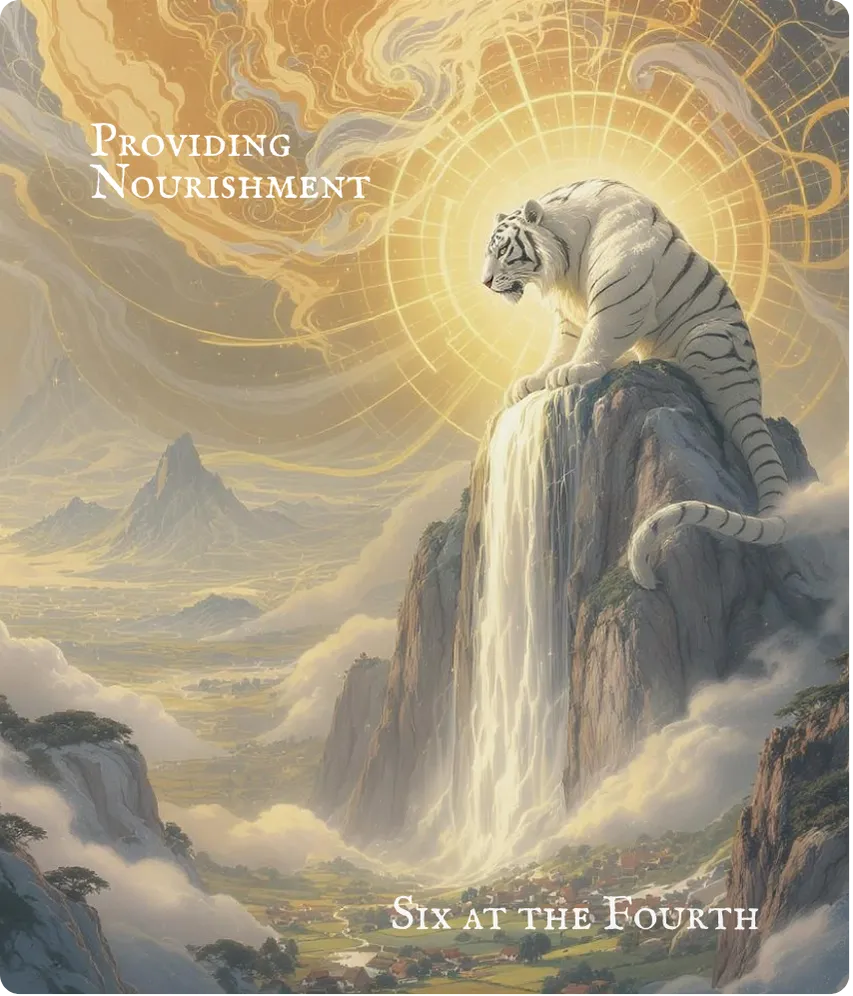
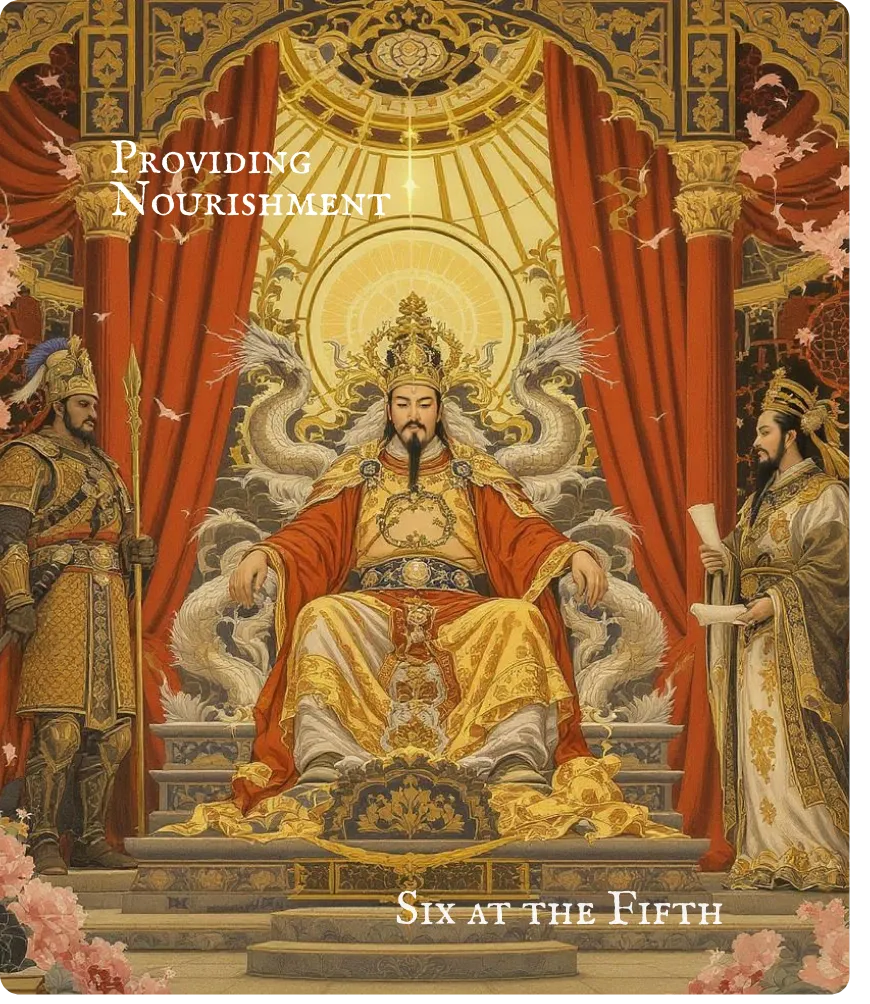
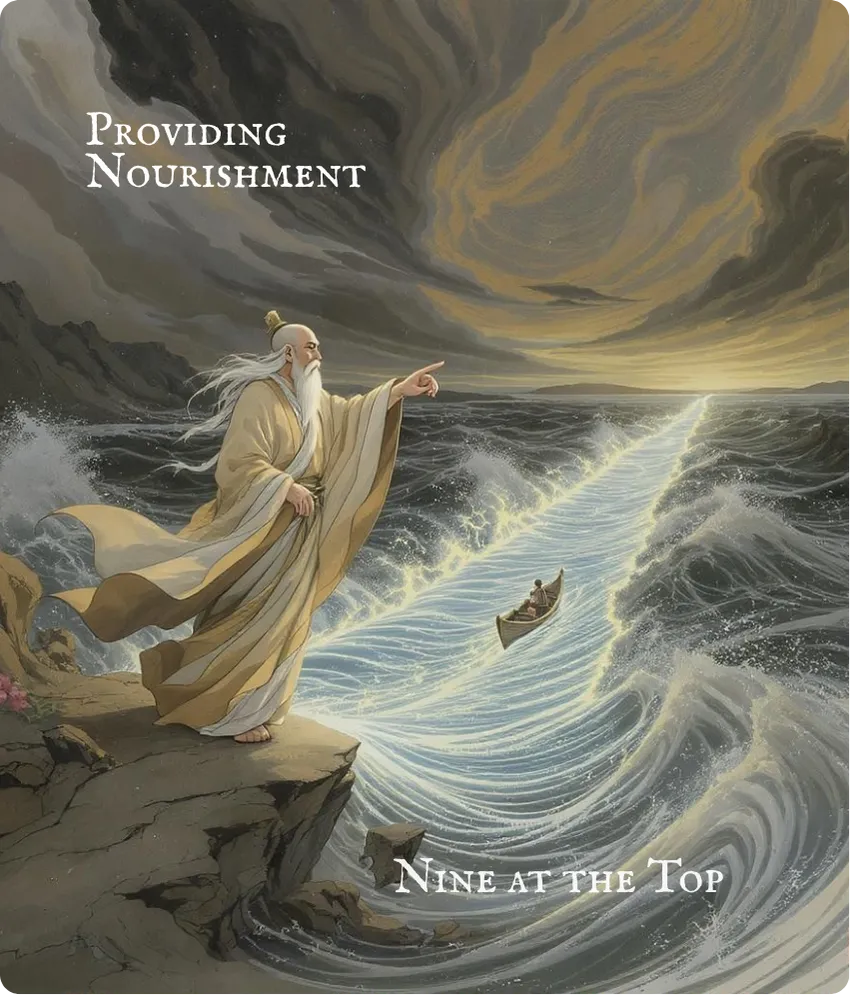
The six lines of Nourishment trace the progression from misguided nourishment to true nourishment: First Nine warns against abandoning self-reliance for the sake of envy; the middle yin lines explore various forms of improper or dependent nourishment; Six in the Fourth finds proper nourishment through helping others; Six in the Fifth recognizes one's limitations; and Nine at the Top achieves the highest form — nourishing all through one's own accumulated virtue.

Yilore app icon

Get the Yilore app

Full charts, daily hexagrams, and deeper AI readings on your phone.

App Store

FAQ

What is Hexagram 27 about?

Hexagram 27, The Corners of the Mouth (Yi), is about nourishment in all its forms — what we take in physically, mentally, and spiritually, and what we give out. The hexagram's image of jaws (mountain above, thunder below) represents the act of eating and speaking. It teaches that our character is revealed by what we choose to nourish ourselves with.

What does 'pay heed to the providing of nourishment' mean?

It means to observe carefully what you and others seek as nourishment — not just food, but words, ideas, relationships, and experiences. A person who seeks quality nourishment for body and mind will thrive; one who feeds on gossip, excess, or empty stimulation will decline. It is a call for mindfulness about all inputs.

Is Hexagram 27 favorable?

It is favorable when accompanied by perseverance and correct nourishment. The judgment says 'perseverance brings good fortune,' meaning that sustained, principled nourishment leads to good outcomes. However, several lines warn against misguided nourishment — the hexagram is more of a teaching than a simple prediction.

What does 'careful of words and temperate in eating' mean?

This is the Image's practical advice: exercise restraint in speech (say only what is true and beneficial) and moderation in consumption (take in only what truly nourishes). Words and food are the two things that pass through the mouth — controlling both is the foundation of self-cultivation.

How does this hexagram relate to spiritual nourishment?

Beyond physical food, the hexagram addresses the nourishment of character and spirit. 'What a person seeks to fill his mouth with' extends to what ideas, beliefs, and values they consume. The highest form of nourishment (Nine at the Top) is nourishing others through one's own accumulated virtue — spiritual generosity.