

Career
In career: this line's teaching of "repeated return — danger, but no blame" applies directly to professional situations. Act in accordance with this principle for the best career outcome.
Six in the Third: Repeated return. Danger. No blame.
Six in the Third: Repeated return. Danger. No blame.
The Tuan says: Return — success. The strong returns. Movement in devotion. Going out and coming in without error: the way of heaven.

The Six in the Third is line 3 of the Return (The Turning Point) hexagram. Returning again and again — falling off the path and getting back on, repeatedly. This is imperfect but ultimately blameless because the intent to return is genuine, even if the execution is inconsistent. Better to keep returning imperfectly than to give up entirely.
As the Yilore card "Patching the Torn Robe" depicts, this line embodies the principle of repeated return — danger, but no blame — a teaching that applies to every area of life.
Patching the Torn Robe
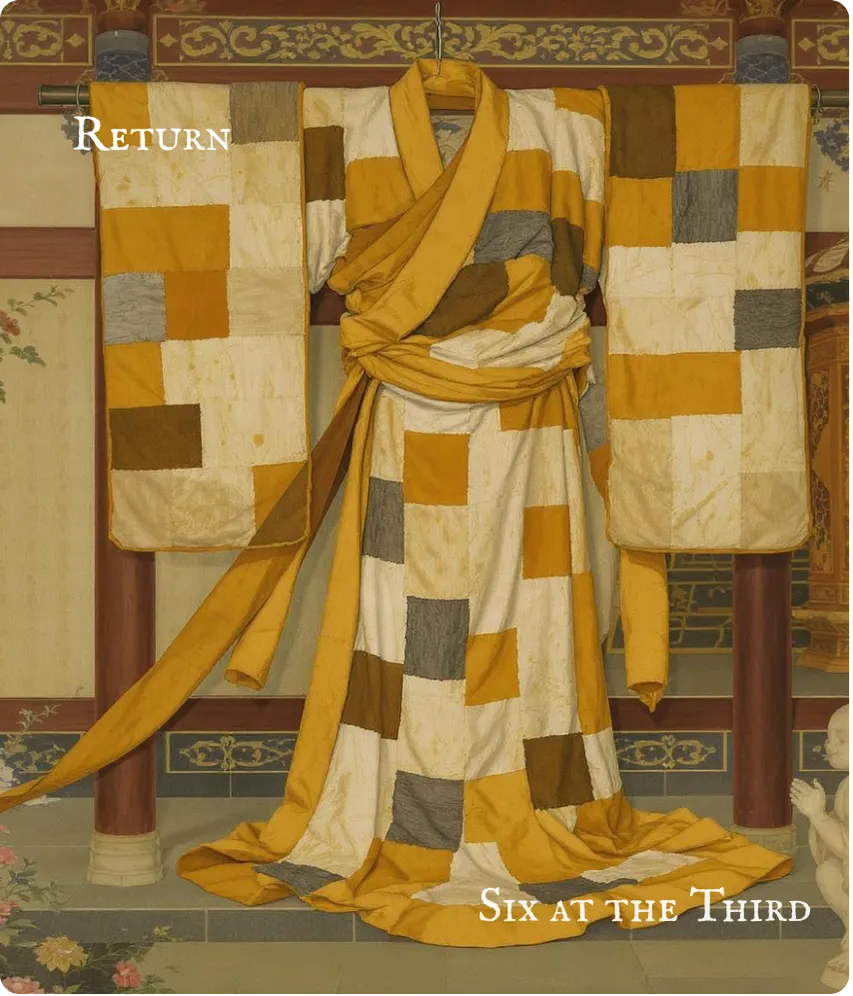
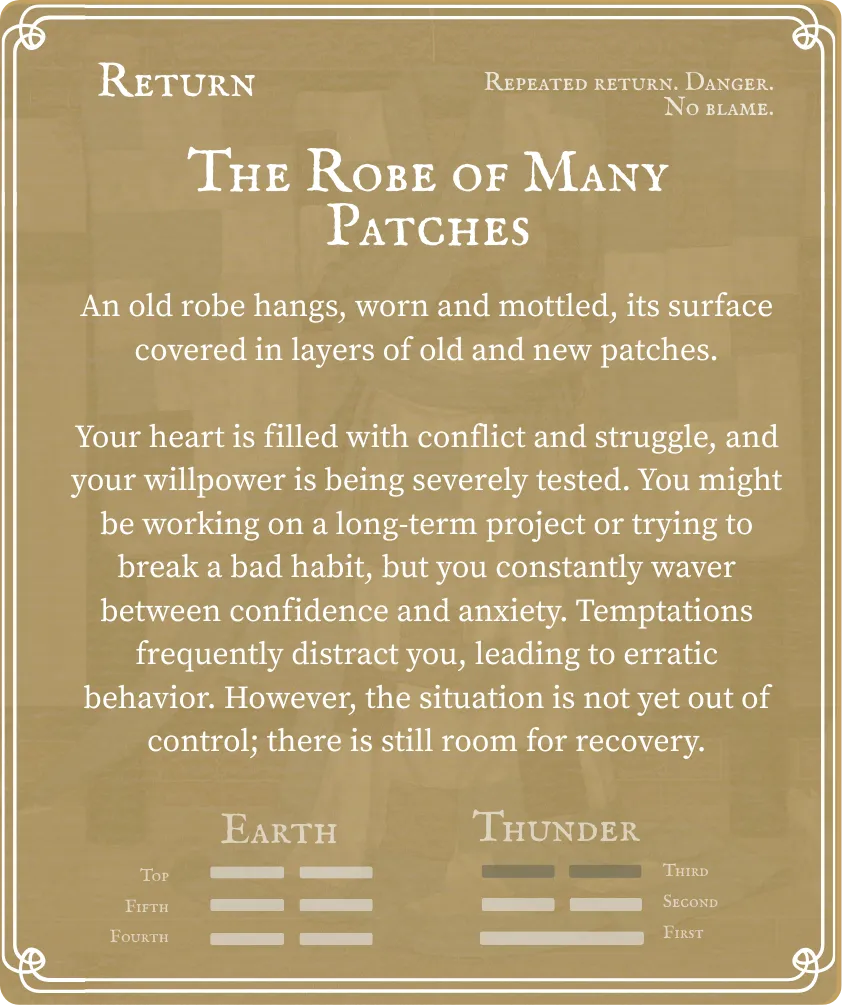
Yilore interprets the Six in the Third of Return (The Turning Point) as "Patching the Torn Robe." This card captures the essence of repeated return — danger, but no blame.
Returning again and again — falling off the path and getting back on, repeatedly. This is imperfect but ultimately blameless because the intent to return is genuine, even if the execution is inconsistent. Better to keep returning imperfectly than to give up entirely.
The card's wisdom teaches us to align our actions with this principle, trusting that genuine alignment with the hexagram's energy brings the most favorable outcomes.
The Six in the Third in divination carries the theme of "Repeated Return — Danger, But No Blame." Returning again and again — falling off the path and getting back on, repeatedly. This is imperfect but ultimately blameless because the intent to return is genuine, even if the execution is inconsist
Career
In career: this line's teaching of "repeated return — danger, but no blame" applies directly to professional situations. Act in accordance with this principle for the best career outcome.

Relationships
In relationships: repeated return — danger, but no blame — apply this wisdom to your love life for deeper connection and better outcomes.

Wealth
Financially: the principle of "repeated return — danger, but no blame" guides sound financial decisions aligned with this line's energy.

Health
Health-wise: embody the spirit of "repeated return — danger, but no blame" in your approach to physical and mental wellbeing.

Full charts, daily hexagrams, and deeper AI readings on your phone.
What does the Six in the Third of Return (The Turning Point) mean?
Returning again and again — falling off the path and getting back on, repeatedly. This is imperfect but ultimately blameless because the intent to return is genuine, even if the execution is inconsistent. Better to keep returning imperfectly than to give up entirely.
What does "Six in the Third: Repeated return. Danger. No blame...." teach us?
This line teaches the principle of repeated return — danger, but no blame. Returning again and again — falling off the path and getting back on, repeatedly. This is imperfect but ultimately blameless because the intent to return is genuine, even if the execution is inconsist
How should I apply the Six in the Third line's guidance?
Apply the principle of "repeated return — danger, but no blame" to your current situation. Returning again and again — falling off the path and getting back on, repeatedly. This is imperfect but ultimately blameless because the intent to ret Trust this guidance and act in alignment with it.