Hexagram 20 Contemplation Explained: Observation, Insight & the Power of Perspective | I Ching

I Ching Hexagram 20 Contemplation (Guan) explained. Wind over the earth — seeing and being seen. Analysis of the judgment, six lines, and guidance for gaining deeper perspective and self-awareness.

Hexagram Overview

Hexagram Text

Contemplation. The ablution has been made, but not yet the offering. Full of trust they look up to him.

Image Commentary

The wind blows over the earth: the image of Contemplation. Thus the kings of old visited the regions of the world, contemplated the people, and gave them instruction.

Hexagram 20 Contemplation (View) — Trigram Diagram

Contemplation (Guan) is the twentieth hexagram. The lower trigram is Kun (Earth) and the upper is Xun (Wind). Wind blowing over the earth reaches everywhere, seeing everything — the image of comprehensive observation and deep contemplation.

The judgment describes a sacred moment: 'The ablution has been made, but not yet the offering.' The priest has purified himself but has not yet begun the ceremony. This is the moment of pure, focused attention — the quality of mind that sees deeply into the nature of things. Contemplation works in two directions: you observe the world, and the world observes you. The quality of your inner life determines what you see and what others see in you.

Yilore Reading

Insight — The Lake's Surface Reflects True Character

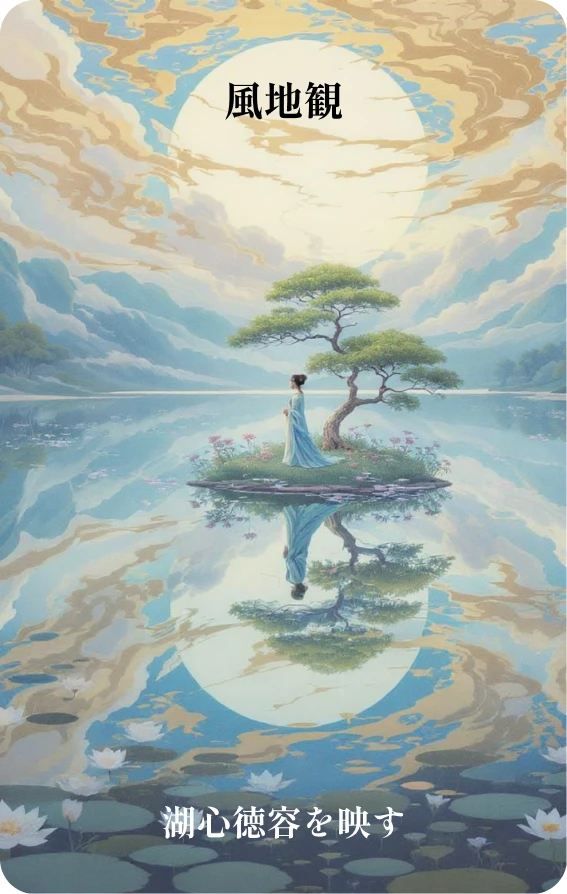
Hexagram 20 Contemplation (View) Card — Front
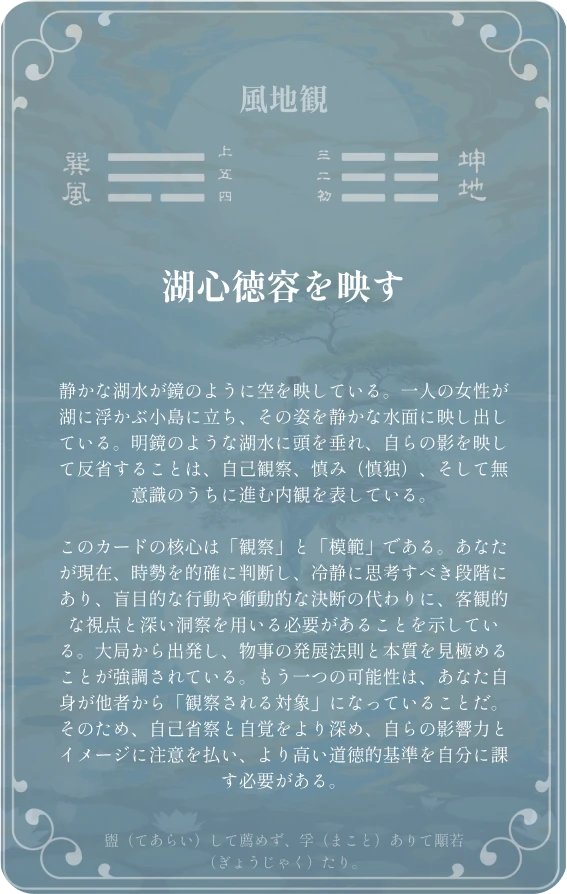
Hexagram 20 Contemplation (View) Card — Back

The Yilore "Contemplation" card shows a serene lake perfectly reflecting the sky above and the mountains around it — a mirror of truth that hides nothing.

This card speaks to the dual nature of contemplation: seeing clearly and being clearly seen. The lake's surface reflects everything without judgment or distortion. When you cultivate this quality of clear, calm observation, you see the world as it truly is — and others see your genuine character reflected back.

The card's deepest teaching: the quality of your observation depends on the quality of your inner stillness. A turbulent mind sees only its own turbulence. A still mind, like a calm lake, reflects reality with perfect clarity.

Divination Insights

Drawing Hexagram 20 — Contemplation calls you to step back and observe before acting. This is a time for gaining perspective, deepening understanding, and examining both the world around you and your own inner landscape.

Career

Career

In career, pause and observe before making moves. Study the dynamics of your workplace, understand the true nature of opportunities and challenges, and gain the perspective that only patient observation provides. The leader who contemplates deeply before acting makes far better decisions than the one who rushes.

Love

Relationships

In relationships, practice deep observation — really see your partner, really listen, really understand. Contemplation in love means moving beyond surface reactions to genuine understanding. Also examine yourself: what patterns are you bringing to the relationship?

Wealth

Wealth

Financially, step back and study the landscape before investing or making major decisions. Contemplation of market conditions, financial trends, and your own financial patterns leads to far better outcomes than impulsive action.

Health

Health

Health-wise, contemplate your body's signals carefully. Pay attention to what your body is telling you rather than ignoring symptoms or pushing through discomfort. Mindful body awareness is the foundation of lasting health.

Line-by-Line Reading

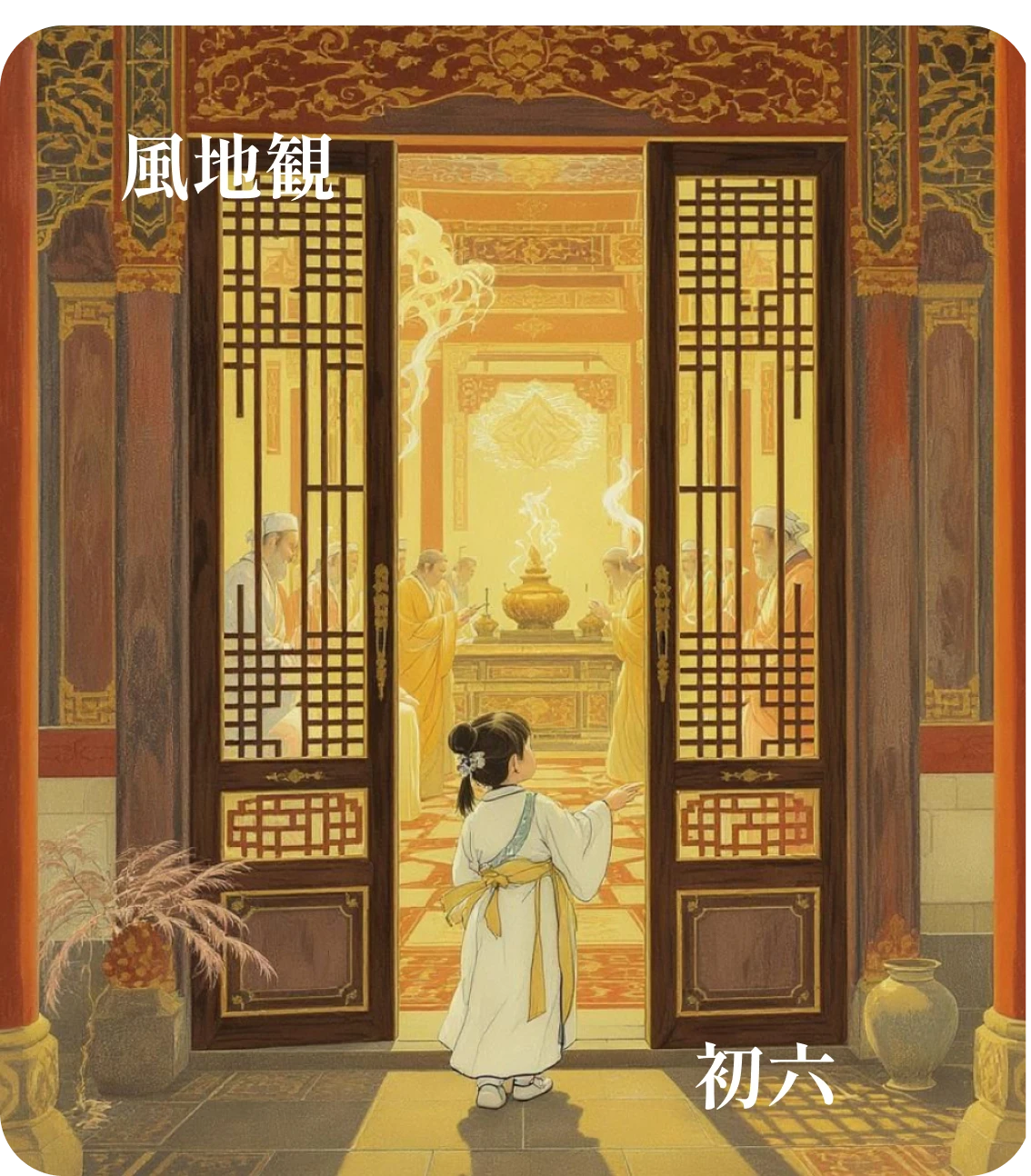
Hexagram 20 Contemplation (View) — First Six Card

First Six

Childish Contemplation — No Blame for the Small

Seeing only through a narrow opening — the limited perspective of inexperience. For ordinary people, this limited view suffices; for those aspiring to leadership, it falls short. Everyone begins with childish observation; the key is not remaining there.

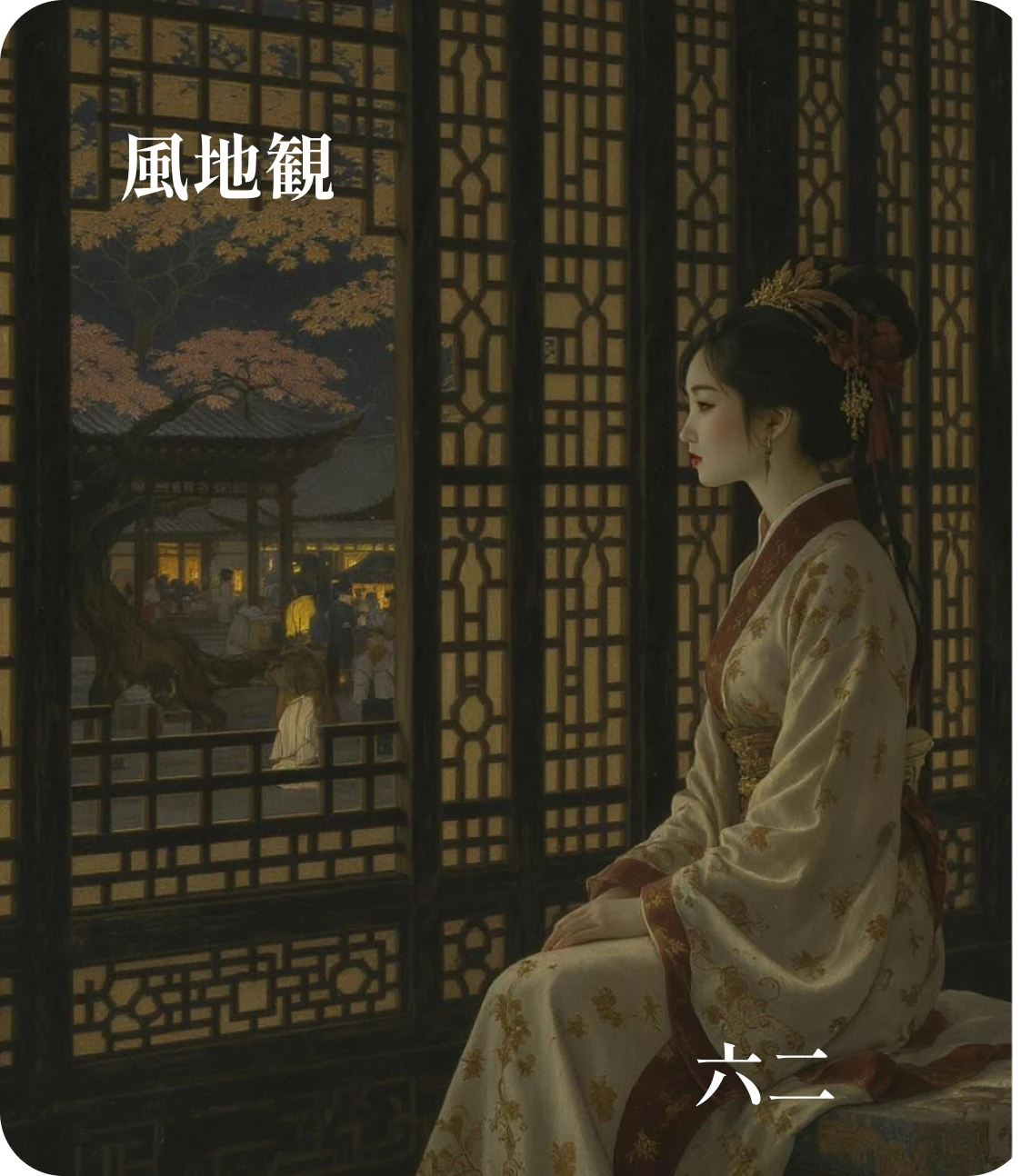
Hexagram 20 Contemplation (View) — Six in the Second Card

Six in the Second

Contemplation Through the Door — Beneficial for a Woman

Seeing from a limited vantage point — peering through a doorway rather than standing in the open. This restricted view may be appropriate in certain circumstances but is insufficient for full understanding.

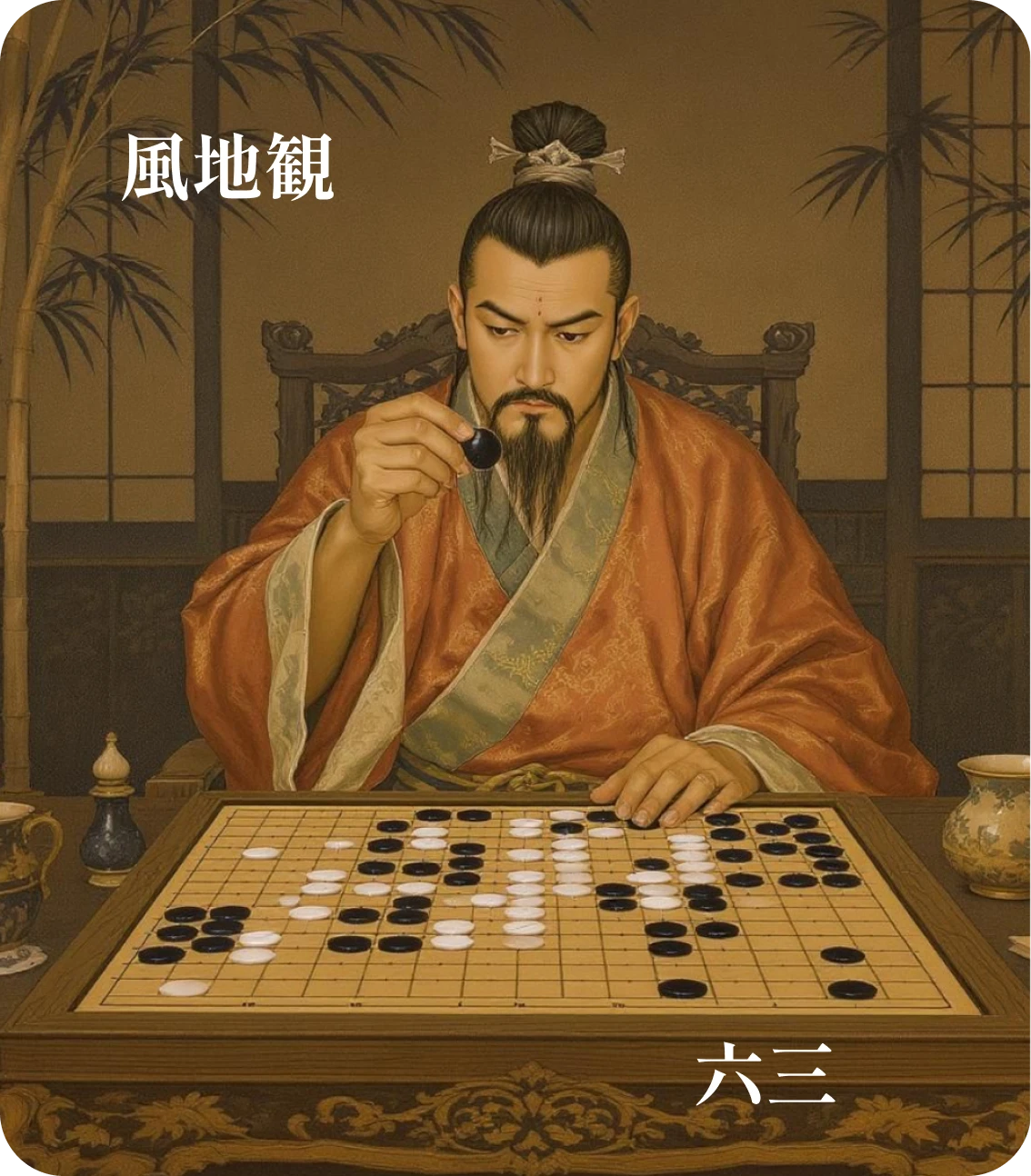
Hexagram 20 Contemplation (View) — Six in the Third Card

Six in the Third

Contemplation of My Life — Advance or Retreat

Turning observation inward to examine your own life, your own patterns, your own contribution to situations. This self-contemplation determines whether you should advance or retreat. Honest self-assessment is the foundation of all wisdom.

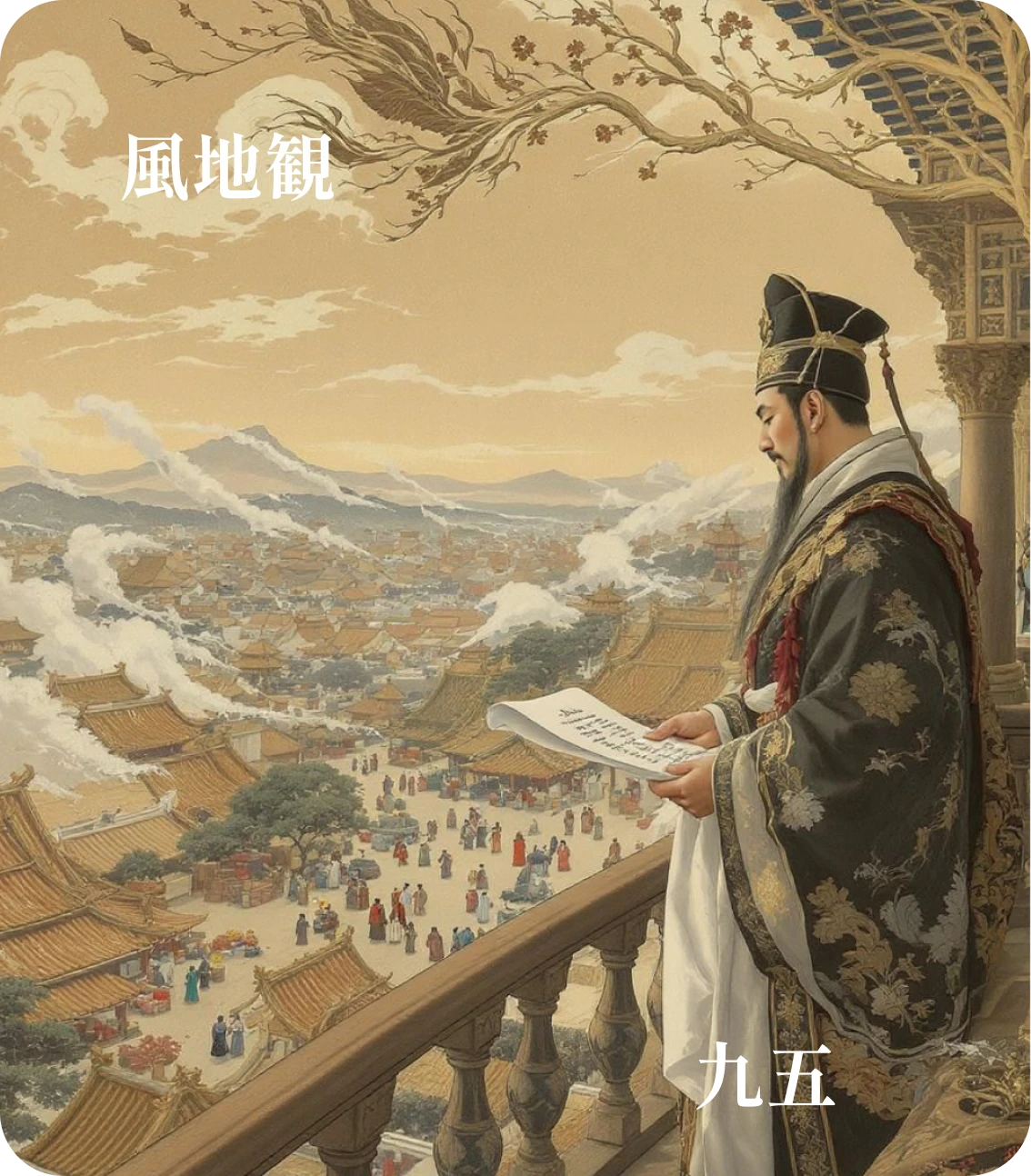
Hexagram 20 Contemplation (View) — Six in the Fourth Card

Six in the Fourth

Contemplation of the Light of the Kingdom

Expanding observation to see the broader picture — the nation's culture, the organization's character, the community's spirit. Understanding this 'light' allows you to serve effectively in a larger context.

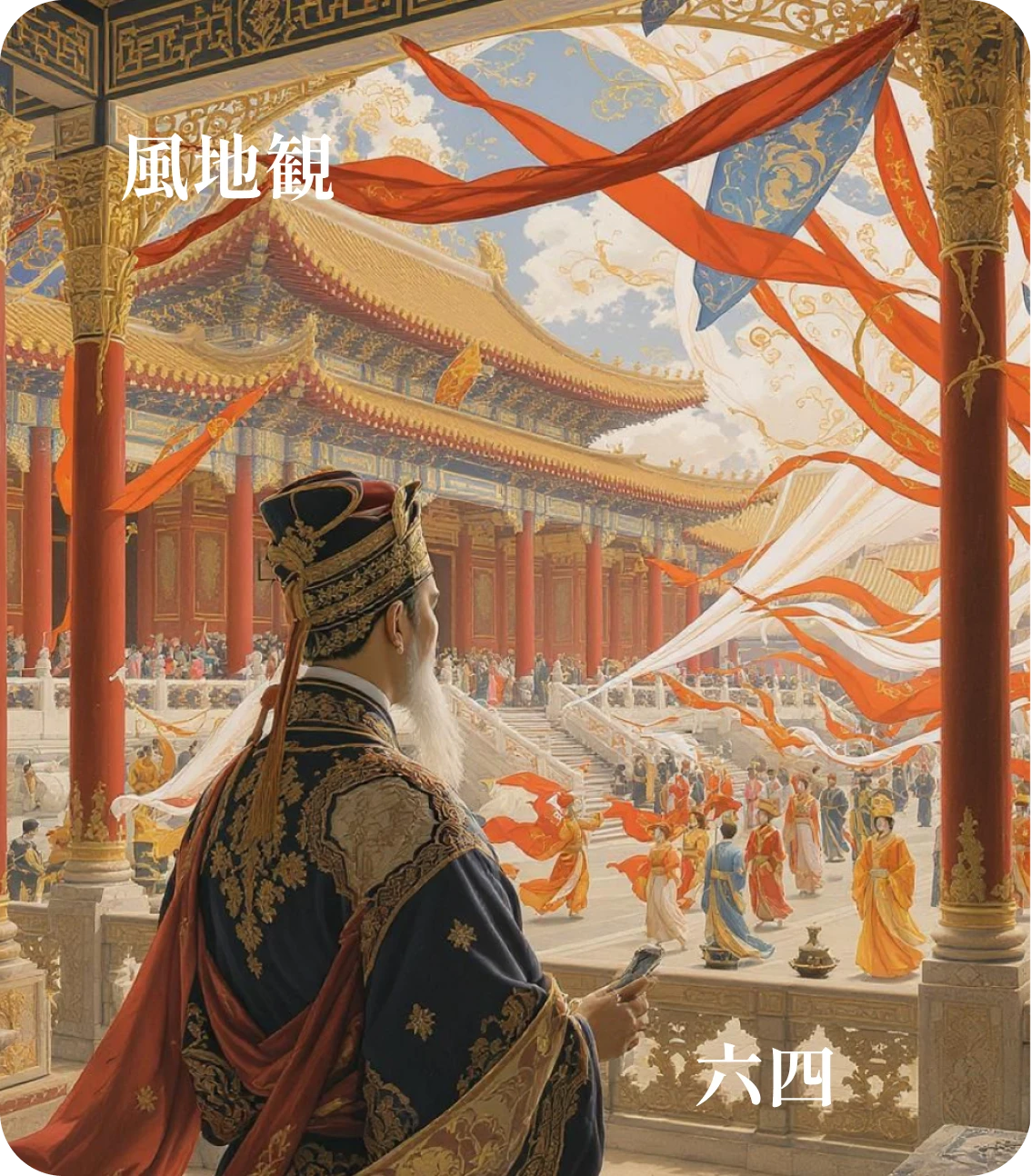
Hexagram 20 Contemplation (View) — Nine in the Fifth Card

Nine in the Fifth

Contemplation of My Life — The Noble Person Is Without Blame

The ruler examines the impact of their own life on others. This is the deepest form of self-contemplation: not narcissistic self-analysis but genuine examination of how your character and actions affect the world around you.

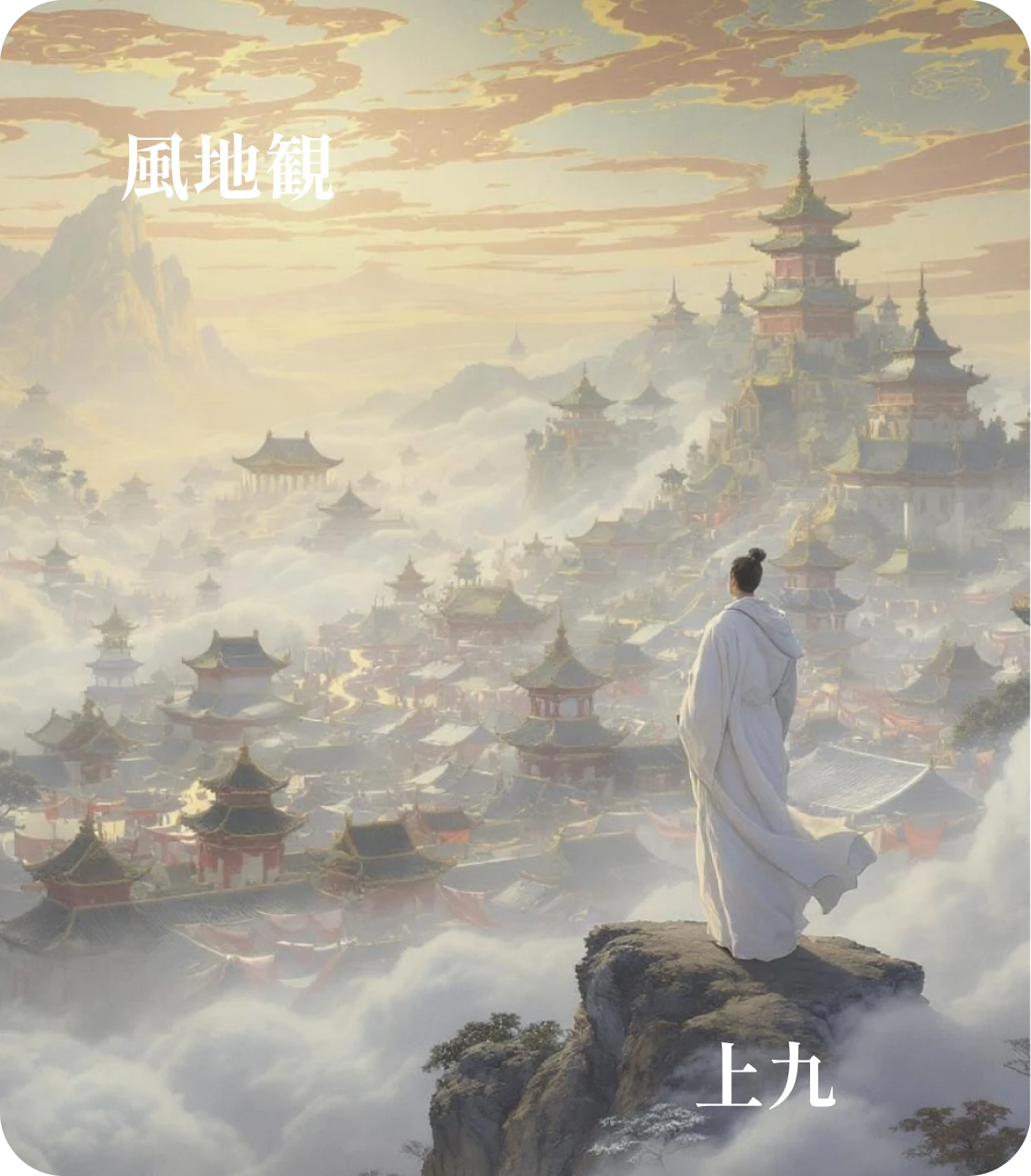
Hexagram 20 Contemplation (View) — Nine at the Top Card

Nine at the Top

Contemplation of His Life — The Noble Person Is Without Blame

The highest contemplation: observing life itself from a transcendent perspective. Detached from personal concerns, this observation sees the patterns of existence with perfect clarity. The sage who achieves this perspective is beyond blame.

易羅 アプリのアイコン

Get the Yilore app

Full charts, daily hexagrams, and deeper AI readings on your phone.

App Store

FAQ

What does Hexagram 20 Contemplation mean?

Contemplation represents the power of deep observation — seeing the world clearly and being seen clearly by others. It calls for stepping back from action to gain perspective, understanding situations deeply before responding, and cultivating the inner stillness that makes genuine insight possible.

Why mention 'the ablution but not the offering'?

This describes the moment of pure, focused attention before action. The priest has purified himself (prepared mentally) but has not yet begun the ceremony (acted). This liminal moment of heightened awareness is when the deepest insights arise. The hexagram asks you to cultivate this quality of intense, purified attention.

How do I practice contemplation in daily life?

Set aside regular time for quiet observation: meditation, journaling, walking in nature, or simply sitting in stillness. Before making important decisions, deliberately pause and observe rather than reacting immediately. Practice seeing situations from multiple perspectives before committing to action.

What is the difference between childish observation and wise contemplation?

The hexagram's lines describe a progression: from 'childish contemplation' (First line — superficial, through a crack in the door) to the sovereign's contemplation (Fifth line — seeing the impact of one's own life on others). The progression is from narrow, self-centered observation to broad, compassionate wisdom. Mature contemplation sees the whole picture, including one's own role in it.

How does contemplation relate to leadership?

The Image says the ancient kings 'visited the regions, contemplated the people, and gave instruction.' True leadership begins with observation — understanding the real conditions and genuine needs of those you serve. Only after deep contemplation can a leader offer guidance that truly fits the situation.