Hexagram 18 Work on What Has Been Spoiled: Repairing Decay, Restoring Order & Renewal | I Ching

I Ching Hexagram 18 Work on What Has Been Spoiled (Gu) explained. Wind stirs beneath the mountain, symbolizing the need to repair decay and corruption. Full analysis of judgment, lines, and practical guidance.

Hexagram Overview

Hexagram Text

Work on What Has Been Spoiled has sublime success. It furthers one to cross the great water. Before the starting point, three days. After the starting point, three days.

Image Commentary

The wind blows low on the mountain: the image of Decay. Thus the superior person stirs up the people and strengthens their spirit.

Hexagram 18 Work on What Has Been Spoiled — Trigram Diagram

Work on What Has Been Spoiled (Gu) is the eighteenth hexagram. The lower trigram is Xun (Wind/Gentle) and the upper is Gen (Mountain/Keeping Still). Wind blowing at the mountain's base — stagnant conditions that have allowed decay to accumulate. The character 蛊 itself depicts worms in a vessel: corruption that breeds when things are left unattended.

The judgment promises 'sublime success' for this work — repairing what has been spoiled is one of the noblest undertakings. 'Before the starting point, three days; after the starting point, three days' counsels careful preparation before acting and careful follow-up afterward. The work of restoration requires patience, planning, and persistence. The Image tells the superior person to 'stir up the people and strengthen their spirit' — because the most important repair is always to the human heart.

Yilore Reading

Cleansing — Clean Hands Sweep Away Dust

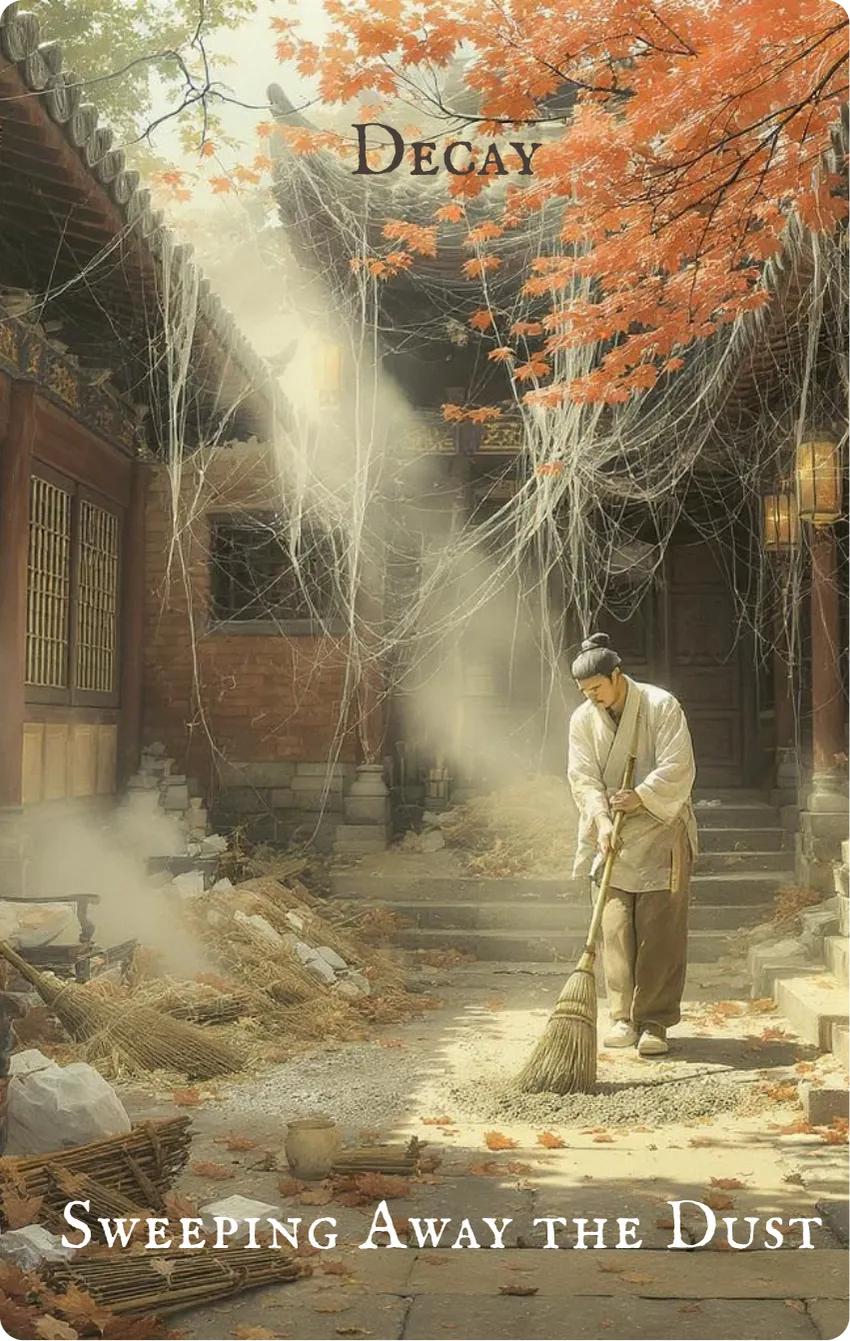
Hexagram 18 Work on What Has Been Spoiled Card — Front
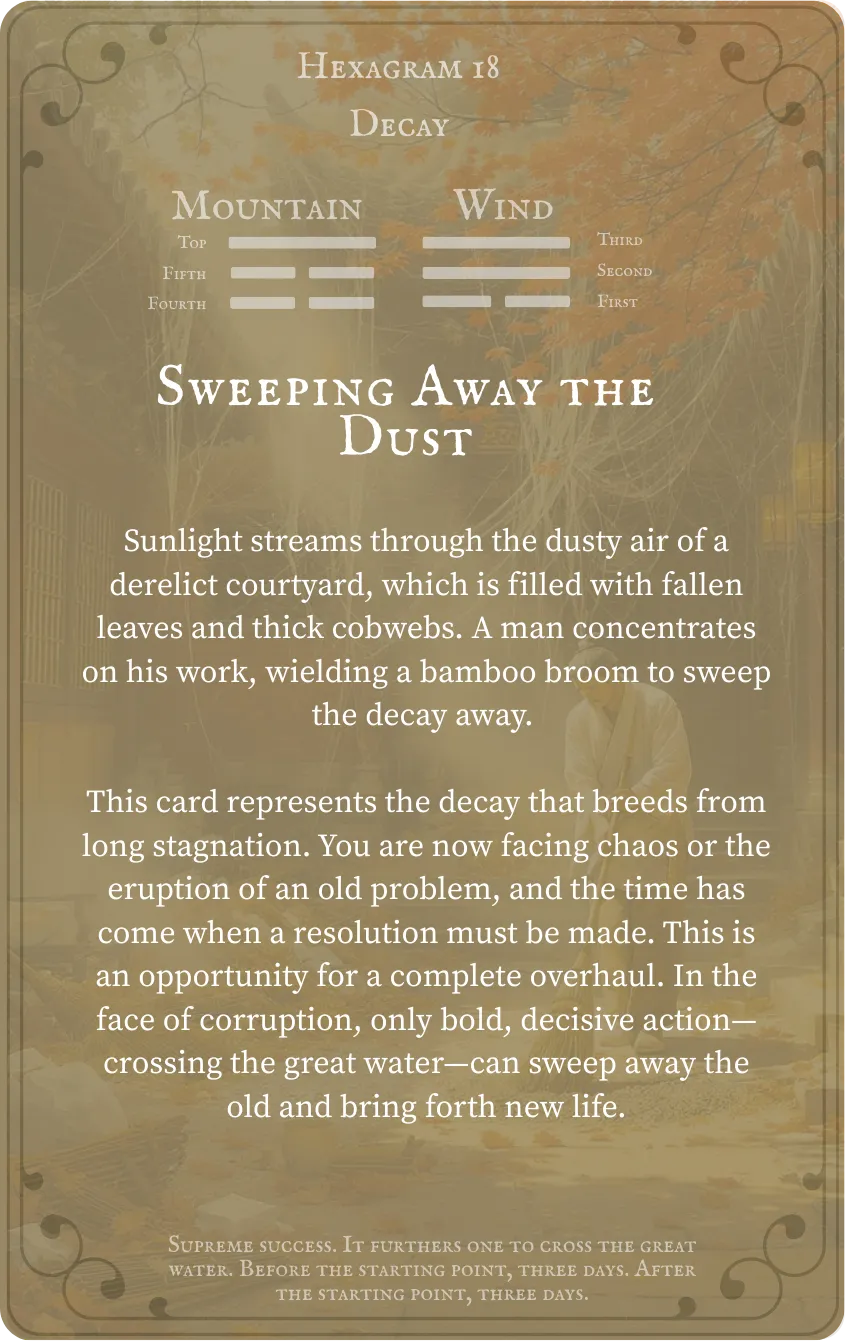
Hexagram 18 Work on What Has Been Spoiled Card — Back

The Yilore "Work on What Has Been Spoiled" card shows a pair of clean hands carefully sweeping away layers of accumulated dust, revealing the beauty that was always beneath.

The Nobility of Repair

This card elevates repair work to its proper status: one of the most noble and valuable activities possible. While others seek glory in creating the new, the person depicted here finds deep meaning in restoring what has been neglected. Cleaning away corruption, repairing broken systems, healing old wounds — this work transforms decay into renewal.

The Three Days Before and After

The card's wisdom includes the hexagram's advice about timing: prepare carefully before starting (three days before) and follow up diligently after acting (three days after). Hasty repairs often make things worse. Patient, thoughtful restoration creates lasting renewal.


Divination Insights

Drawing Hexagram 18 signals that something in your life has decayed, stagnated, or become corrupted through neglect. The good news: this hexagram promises sublime success for those willing to do the hard work of repair and renewal.

Career

Career

In career, something has gone wrong through neglect or mismanagement — perhaps inherited problems, accumulated dysfunction, or slowly degraded standards. This is not a time for blame but for repair. Roll up your sleeves and address the root causes. The work is difficult but deeply rewarding.

Love

Relationships

In relationships, old wounds, accumulated resentments, or neglected issues need attention. The hexagram calls for honest confrontation of what has been spoiled — not to assign blame but to heal and renew. Careful, patient work on the relationship's foundations brings sublime success.

Wealth

Wealth

Financially, address problems that have been accumulating — debts, disorganized accounts, bad investments held too long, or financial habits that have slowly deteriorated. Clean up your financial house with the same care you would bring to repairing a treasured heirloom.

Health

Health

Health issues that have developed through neglect need attention now. Address chronic conditions, change harmful habits, and repair the damage of years of inattention. The hexagram promises that even long-standing health problems can improve with dedicated, patient effort.

Line-by-Line Reading

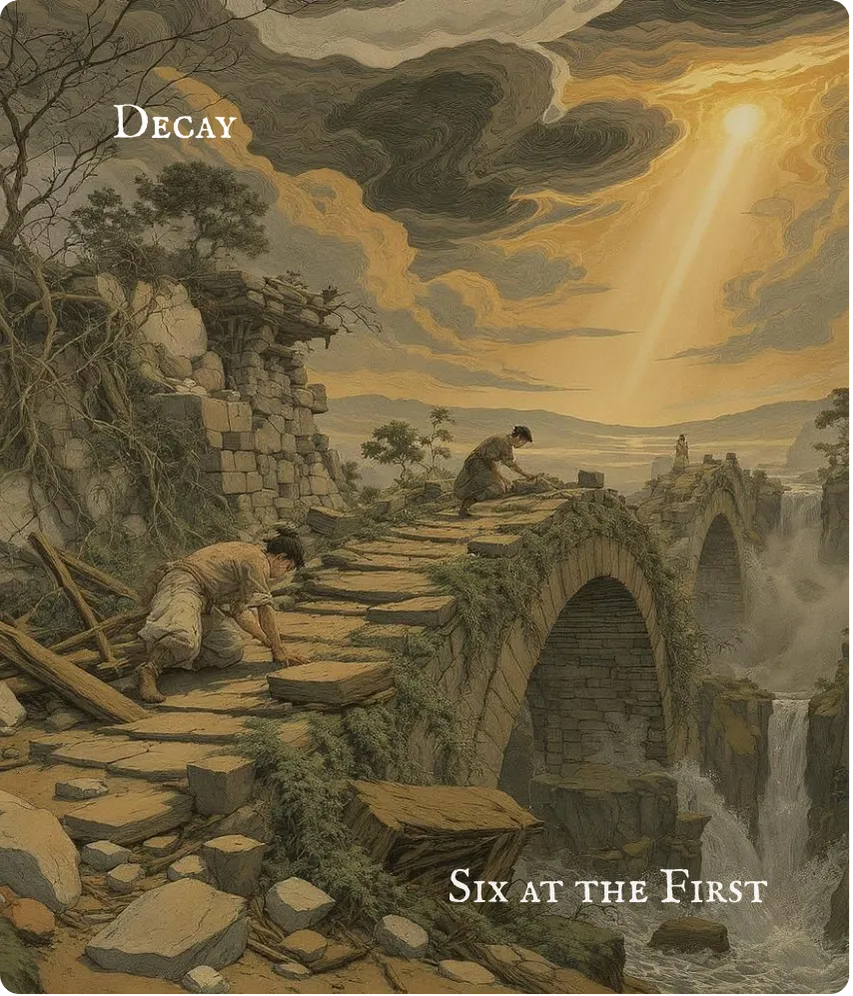
Hexagram 18 Work on What Has Been Spoiled — First Six Card

First Six

Setting Right What the Father Has Spoiled — Danger, But Good Fortune

Taking on inherited problems with courage. Repairing the previous generation's mistakes is dangerous but ultimately brings good fortune. The son who fixes what the father broke earns deep respect.

Hexagram 18 Work on What Has Been Spoiled — Nine in the Second Card

Nine in the Second

Setting Right What the Mother Has Spoiled — Finding the Middle Way

Gentler repair work: addressing problems inherited from the mother (the yielding, receptive side). This requires a softer touch — diplomacy rather than force, persuasion rather than command. Finding the middle way is essential.

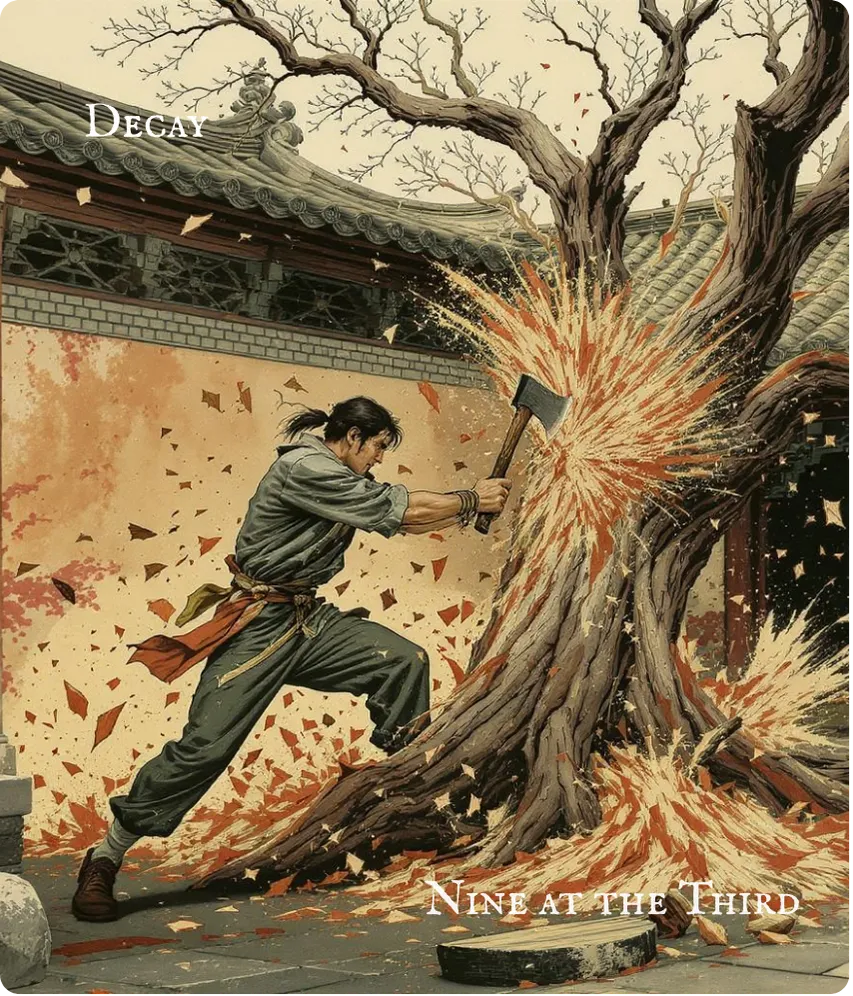
Hexagram 18 Work on What Has Been Spoiled — Nine in the Third Card

Nine in the Third

Setting Right What the Father Has Spoiled — Some Regret, No Great Blame

Energetic, perhaps overly forceful repair work. There may be some regret from being too aggressive, but ultimately there is no serious blame. Better to err on the side of action than inaction when decay threatens.

Hexagram 18 Work on What Has Been Spoiled — Six in the Fourth Card

Six in the Fourth

Tolerating What the Father Has Spoiled — Going On Brings Humiliation

A warning against inaction: merely tolerating inherited problems without addressing them leads to humiliation. If you see decay and do nothing, the situation only worsens. Passive tolerance of corruption is itself a form of corruption.

Hexagram 18 Work on What Has Been Spoiled — Six in the Fifth Card

Six in the Fifth

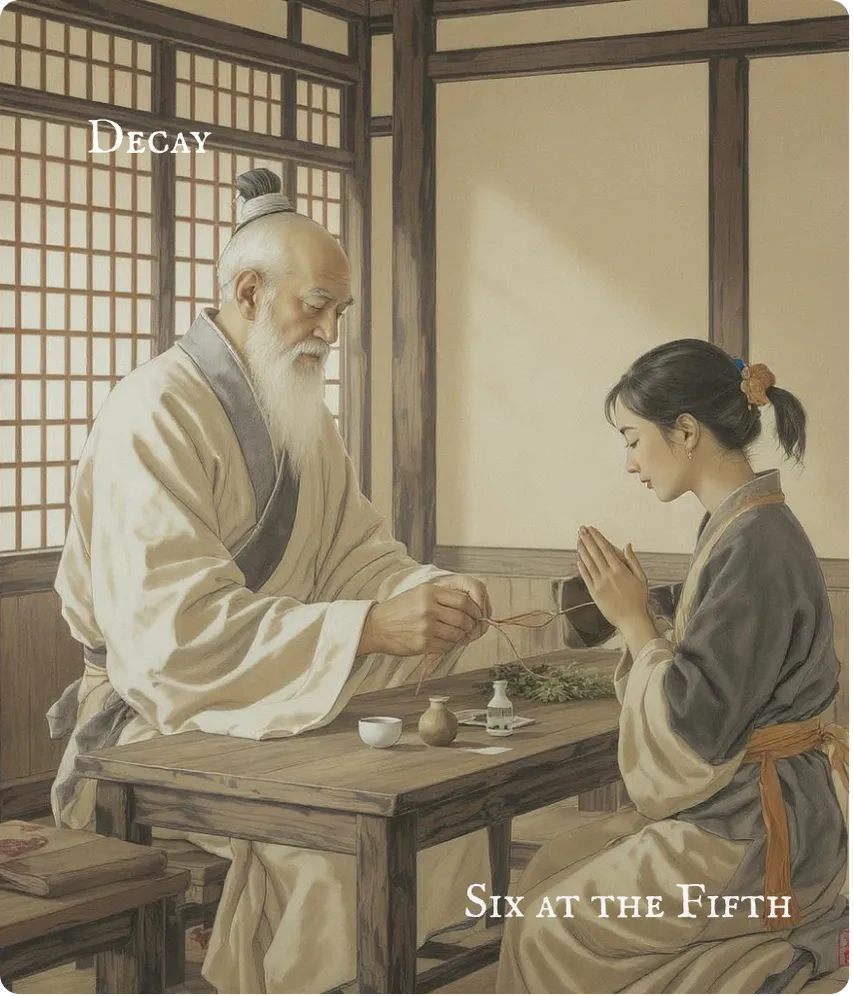
Setting Right What the Father Has Spoiled — Meeting With Praise

The most auspicious repair: using wisdom and virtue to address inherited problems, earning recognition and praise. This is the ruler who turns dysfunction into excellence, earning the people's genuine admiration.

Hexagram 18 Work on What Has Been Spoiled — Nine at the Top Card

Nine at the Top

Not Serving Kings and Princes — Setting Higher Goals

Having completed the work of repair, this person rises above worldly service to pursue higher spiritual goals. Not everyone's purpose is to serve in government — some serve best by cultivating wisdom and setting an example of noble independence.

Yilore app icon

Get the Yilore app

Full charts, daily hexagrams, and deeper AI readings on your phone.

App Store

FAQ

What does 'Work on What Has Been Spoiled' mean?

It refers to repairing decay, corruption, or dysfunction that has accumulated through neglect over time. The Chinese character 蛊 depicts worms breeding in a neglected vessel — problems that fester when left unattended. The hexagram calls you to address these accumulated problems with patience, courage, and thorough preparation.

Why does the hexagram promise 'sublime success'?

Because repairing what has been spoiled is among the most valuable work possible. It takes more skill and courage to restore something broken than to build something new from scratch. The I Ching recognizes this with its highest praise: sublime success for those who undertake this difficult, noble work.

What do 'three days before, three days after' mean?

They represent careful preparation before acting and thorough follow-up afterward. In Chinese cosmology, 'before the starting point' (先甲) and 'after the starting point' (后甲) indicate that repair work must not be rushed. Study the problem thoroughly before acting, then verify your results carefully afterward. Hasty repairs often create new problems.

How does this hexagram apply to relationships?

It speaks directly to repairing damaged relationships. The 'decay' may be accumulated resentments, broken trust, neglected communication, or old wounds that were never properly healed. The hexagram promises that patient, honest work on these issues — addressing root causes, not just symptoms — can bring the relationship back to health.

Is the decay always someone else's fault?

The hexagram's lines speak of 'the father's decay' and 'the mother's decay' — problems inherited from the previous generation. This is not about blame but about responsibility. Whether you caused the problem or inherited it, the work of repair falls to you. Accepting this responsibility without bitterness is the first step toward sublime success.

What does the wind at the mountain's base symbolize?

Stagnant air that breeds decay. When wind (fresh energy, new thinking) reaches the base of the mountain (accumulated, static situations), it stirs things up — uncomfortable but necessary. The hexagram calls you to be that fresh wind: stirring up stagnant situations, exposing hidden problems, and revitalizing what has become lifeless.

How does this apply to my career?

Look for accumulated dysfunction in your workplace: outdated processes, unresolved conflicts, declining standards, or systems that no one has questioned in years. Addressing these 'inherited' problems — even when they aren't your fault — is the fastest path to professional distinction. The person who repairs what others have neglected becomes indispensable.