Hexagram 6 Conflict — Nine in the Fifth Line Explained

Nine in the Fifth: To contend before him brings supreme good fortune. The only truly auspicious line in Conflict — justice and fairness triumph under wise arbitration.

Yao Position Overview

Yao Text

Nine in the Fifth: To contend before him brings supreme good fortune.

Tuan Commentary

The Tuan Commentary says: Conflict — the upper trigram is strong, the lower dangerous. Danger meeting strength: Conflict. "You are sincere yet obstructed; a cautious halt brings good fortune" — because the strong line comes and gains the center. "Misfortune at the end" — conflict cannot be carried to completion. "It furthers one to see the great person" — this honors what is central and correct. "It does not further one to cross the great water" — one would fall into the abyss.

Hexagram 6 Conflict — Nine in the Fifth Line Card

The Nine in the Fifth is the fifth line of the Conflict hexagram — a yang line in the ruler's position, central and correct. This is the only line in the entire hexagram that declares "supreme good fortune" (元吉). It represents the ideal scenario in any conflict: a wise, impartial, and powerful arbiter who can deliver true justice.

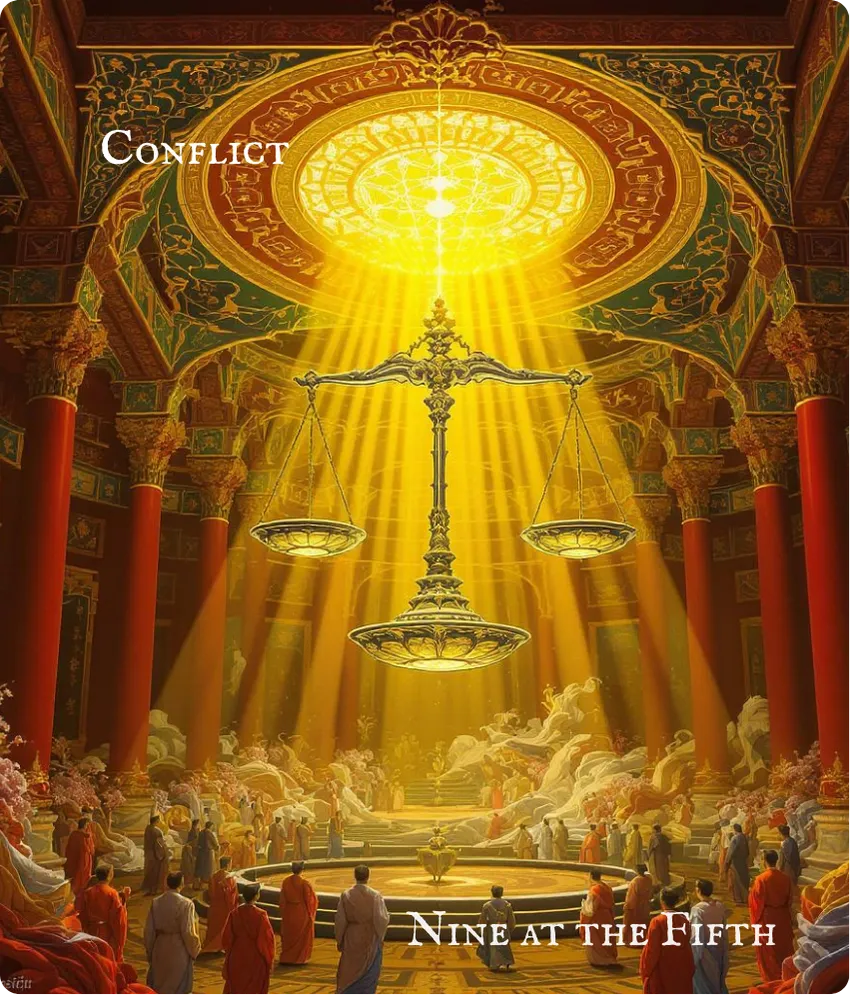
As the card depicts — a great golden scale hangs perfectly balanced, presided over by a figure of unquestioned authority. When you draw this line, it means that your dispute will be resolved fairly, your grievances will be heard, and justice will prevail. But this fortune depends on two conditions: you must be genuinely in the right, and you must bring your case before someone worthy of trust.

Yilore Reading

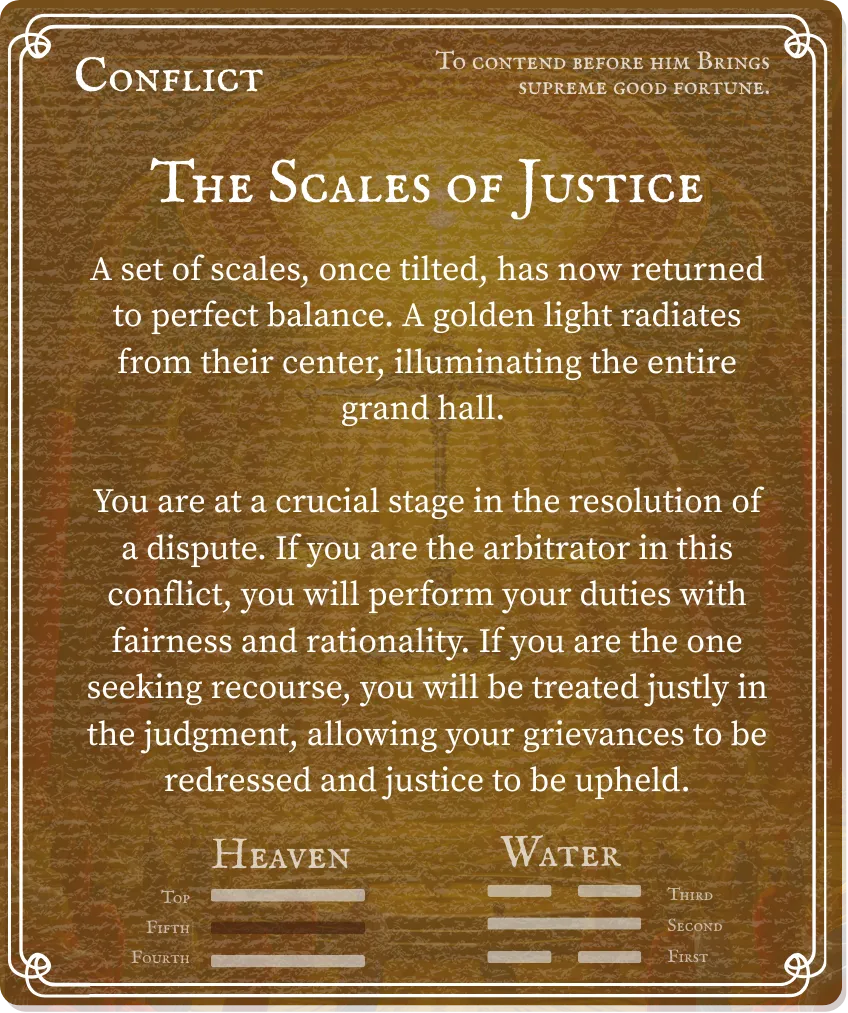
The Scales of Justice

Hexagram 6 Conflict — Nine in the Fifth Card Front
Hexagram 6 Conflict — Nine in the Fifth Card Back

Yilore interprets the Nine in the Fifth of the Conflict hexagram as "The Scales of Justice." This is the most powerful and hopeful card within the Conflict series — the moment when fairness prevails and truth is vindicated.

The card depicts a magnificent golden scale in perfect balance, symbolizing the rare and precious phenomenon of true justice. In a hexagram dominated by warnings against conflict, this single line shines like a beacon: sometimes fighting for what is right does pay off, provided you bring your case before the right arbiter.

The card's deepest teaching is that justice is not automatic — it requires both a righteous cause and a fair judge. The "supreme good fortune" is conditional: you must genuinely be in the right (not merely believe you are), and you must seek judgment from someone of true authority and impartiality. When these two conditions align, the outcome transcends mere resolution — it becomes a restoration of cosmic order, a reaffirmation that truth and fairness still matter.


Divination Insights

The Nine in the Fifth line in divination carries the core theme: "Justice will prevail — supreme good fortune through fair arbitration." This is the most favorable line in the Conflict hexagram, promising a resolution that is both just and satisfying. The overall tone: your case is strong, and a fair judge will vindicate you.

Career

In career matters, the Nine in the Fifth is enormously encouraging. If you have been wronged in the workplace — unfairly passed over, falsely accused, or cheated of what you deserve — this line promises vindication. A fair-minded authority figure will hear your case and rule in your favor. The key is to present your case clearly, honestly, and through proper channels. Do not resort to gossip or underhanded tactics; let the strength of your position speak for itself.

Relationships

In matters of the heart, the Nine in the Fifth suggests that a relationship dispute will find fair resolution — perhaps through couples counseling, a trusted mutual friend, or simply one partner finally truly listening to the other. If you have been feeling unheard or misunderstood, take heart: your sincere feelings will be recognized and validated. The "great person" in a relationship context is anyone who can help both sides see clearly.

Wealth

Financially, this is the best possible line for any legal or contractual dispute involving money. If you have a legitimate financial grievance — a broken contract, unpaid debts, or disputed assets — pursuing it through proper legal channels will yield a favorable result. The scales of justice are balanced, and the law will be on your side. However, this applies only if your claim is genuinely just — the Nine in the Fifth rewards integrity, not cunning.

Health

Health-wise, the Nine in the Fifth is reassuring. If you have been worried about a diagnosis or struggling to get proper treatment, this line promises that you will find the right doctor or healthcare provider — someone with genuine expertise and integrity. Trust the process, seek a second opinion from a qualified authority, and the correct path to healing will become clear.

Yilore app icon

Get the Yilore app

Full charts, daily hexagrams, and deeper AI readings on your phone.

App Store

FAQ

Why is the Fifth line the only one with 'supreme good fortune' in the Conflict hexagram?

Because the Nine in the Fifth occupies the ruler's position — central, correct, and authoritative. It represents the ideal conditions for resolving conflict: a just cause brought before a fair and powerful arbiter. All other lines in the hexagram either counsel retreat, warn of danger, or describe hollow victories. Only here, where true justice is available, does the hexagram promise an unqualified positive outcome.

Does drawing the Fifth line mean I should go ahead and fight my case?

Yes, but only if two conditions are met: first, you must be genuinely in the right, not just convinced of your own righteousness; second, you must have access to a fair and authoritative arbiter — a good judge, a wise leader, or a trustworthy mediator. If both conditions hold, proceed with confidence. But be honest with yourself: if your case is even slightly shaky, the other lines' warnings about conflict still apply.

What is the 'great person' mentioned in the hexagram judgment?

The "great person" refers to any fair, wise, and authoritative figure who can serve as an impartial arbiter. In ancient times, this meant a virtuous ruler or sage. In modern life, it could be a respected judge, a trusted mediator, an industry authority, or even a wise friend whom both parties respect. The key qualities are impartiality, wisdom, and the authority to enforce a decision.