
Hexagram 6 Conflict — First Six Line Explained

First Six: Do not prolong the affair. There is a little gossip. In the end, good fortune. The First Six line of Conflict symbolizes a dispute barely begun and not lasting — minor criticism, ultimately auspicious.

Yao Position Overview

Yao Text

First Six: Do not prolong the affair. There is a little gossip. In the end, good fortune.

Tuan Commentary

The Tuan Commentary says: Conflict — the upper trigram is strong, the lower dangerous. Danger meeting strength: Conflict. "You are sincere yet obstructed; a cautious halt brings good fortune" — because the strong line comes and gains the center. "Misfortune at the end" — conflict cannot be carried to completion. "It furthers one to see the great person" — this honors what is central and correct. "It does not further one to cross the great water" — one would fall into the abyss.

Hexagram 6 Conflict — First Six Line Card

The First Six is the first line of the Conflict hexagram — a yin line in the lowest position. "Do not prolong the affair" means do not let the dispute drag on — quit while you are ahead and stop in time. "There is a little gossip" indicates some minor criticism and petty quarrels, but nothing of great scale. "In the end, good fortune" promises an auspicious outcome — as long as you do not blow a small matter out of proportion.

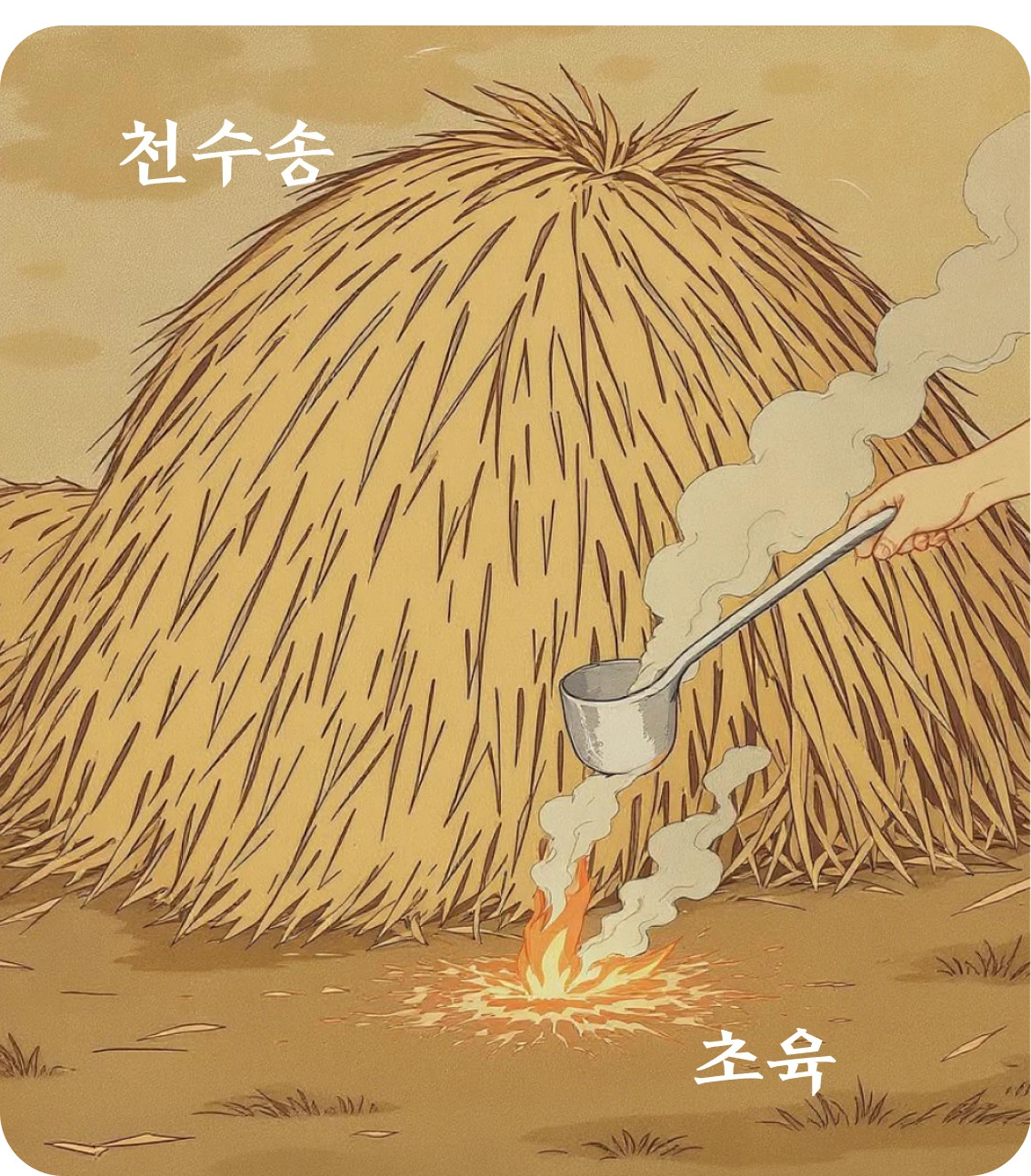
As the card depicts — beside a haystack, a small fire has just flickered to life, but it is quickly doused. You may experience minor disputes and friction in the near future, but the situation remains well within control and will be resolved swiftly. There is no need to worry.

Yilore Reading

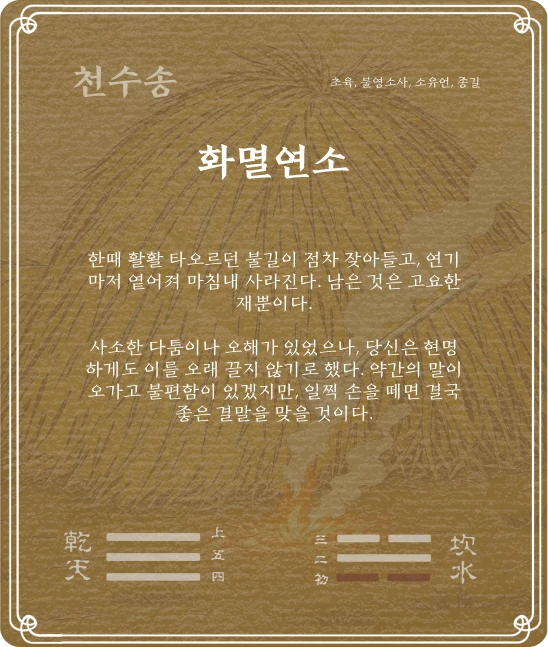
Fire Extinguished, Smoke Cleared

Hexagram 6 Conflict — First Six Card Front
Hexagram 6 Conflict — First Six Card Back

Yilore interprets the First Six of the Conflict hexagram as "Fire Extinguished, Smoke Cleared." When this card appears, it conveys a reassuring message: the conflict you fear is actually far less serious than you imagine.

As the card illustrates — a tiny fire has just started beside a haystack, but someone has already poured water on it and extinguished it. The smoke curls upward and dissipates. This is the visual expression of "do not prolong the affair, in the end good fortune" — the dispute is brief and quickly extinguished.

The card's deepest insight is about the value of timely restraint. Many conflicts escalate not because the matter itself is grave, but because the parties refuse to let go. In your current situation, you still have the opportunity to nip the conflict in the bud. A word of conciliation, a gesture of goodwill, or simply choosing not to respond can prevent a spark from becoming an inferno. The First Six reminds us that the greatest wisdom often lies in knowing when not to fight.

Divination Insights

The First Six line in divination carries the core theme: "Stop the small dispute at once — do not dwell on it." The conflict you currently face is still small and entirely manageable. The overall tone is: cease contention promptly, do not get entangled — the minor disagreement will pass quickly.

Career

The First Six in career matters points to a minor workplace friction — perhaps a difference of opinion with a colleague, a slight clash with a superior, or a small project disagreement. Do not treat these small matters as major crises. There is no need to escalate, no need to involve management, and certainly no need to hold grudges. A smile, an apology, or a private chat is enough to resolve it. "In the end, good fortune" tells you: as long as you don't make a mountain out of a molehill, the outcome will be favorable.

Relationships

In love, the First Six suggests minor friction or a small squabble with your partner. This is perfectly normal — no couple never argues. The key is not to drag up old grievances, not to resort to personal attacks, and not to turn a small quarrel into grounds for a breakup. Douse the flame the moment it appears — a gentle word, a warm embrace, and the conflict dissolves.

Wealth

Financially, the First Six may indicate a minor dispute — an unclear account, a rejected reimbursement, or a small disagreement over money with someone. It is not worth going to war over a small sum. If the amount is modest, being generous and yielding can actually earn you greater trust and goodwill in return.

Health

Health-wise, the First Six suggests you may have mild symptoms of internal heat — mouth ulcers, throat discomfort, or insomnia. These are manifestations of emotional tension. Relax your mindset, avoid pointless irritation, and the symptoms will subside quickly.

이라 앱 아이콘

Get the Yilore app

Full charts, daily hexagrams, and deeper AI readings on your phone.

App Store

FAQ

What does 'Do not prolong the affair. There is a little gossip. In the end, good fortune' mean?

"Do not prolong the affair" means do not let the dispute drag on — stop while the situation is still manageable. "There is a little gossip" indicates some minor criticism and petty quarrels, but they are small in scale. "In the end, good fortune" promises an auspicious outcome — as long as you don't turn a small issue into a big one. The core wisdom is: most disputes escalate not because they are inherently serious, but because the parties involved refuse to stop. Timely restraint is the greatest wisdom.

How should I handle a conflict if I draw the First Six changing line?

When you receive the First Six changing, the best strategy for handling conflict can be summed up in four words: stop right here. No matter how wronged you feel or how unreasonable the other side seems, do not continue the entanglement. The hexagram shows that pressing on benefits no one — but stopping now lets you emerge unscathed (in the end, good fortune). In practice: signal goodwill to the other party, express willingness to make peace, and redirect your energy to more worthwhile pursuits.

What does the First Six line teach about workplace conflicts?

In workplace conflicts, the First Six's lesson is supremely practical: most office disputes are things that "do not prolong" — they are not worth betting your career on. A spat with a colleague, a rejected proposal, a reprimand from a superior — these are all "a little gossip" that everyone forgets within days. But if you insist on fighting for vindication, a small matter can snowball. The cleverest people in the workplace are often not the best fighters, but those who know when not to fight.