
Hexagram 6 Conflict — Nine in the Second Line Explained

Nine in the Second: One cannot engage in conflict. One returns and retreats. His townspeople remain free of blame. Strategic retreat when outmatched preserves everyone from harm.

Yao Position Overview

Yao Text

Nine in the Second: One cannot engage in conflict. One returns home and retreats. The people of his town, three hundred households, remain free of blame.

Tuan Commentary

The Tuan Commentary says: Conflict — the upper trigram is strong, the lower dangerous. Danger meeting strength: Conflict. "You are sincere yet obstructed; a cautious halt brings good fortune" — because the strong line comes and gains the center. "Misfortune at the end" — conflict cannot be carried to completion. "It furthers one to see the great person" — this honors what is central and correct. "It does not further one to cross the great water" — one would fall into the abyss.

Hexagram 6 Conflict — Nine in the Second Line Card

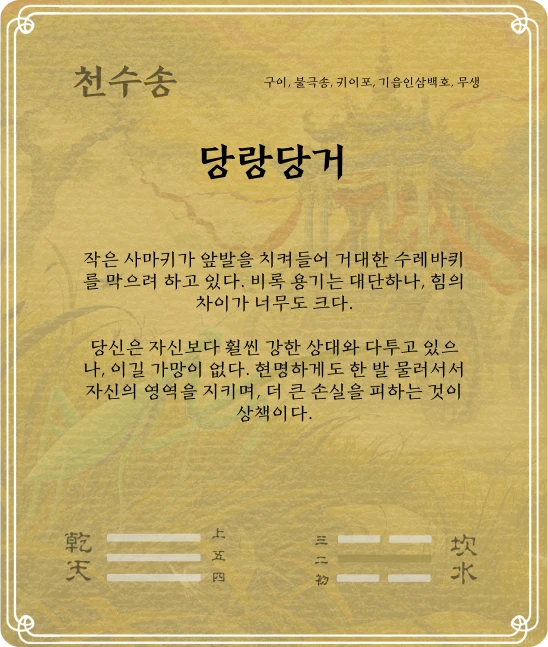
The Nine in the Second is the second line of the Conflict hexagram — a yang line in the second position. "One cannot engage in conflict" means recognizing that one is outmatched or in the wrong and cannot win this dispute. "Returns home and retreats" indicates a wise withdrawal to one's own small domain. "Three hundred households remain free of blame" means this retreat not only saves oneself but protects the entire community from collateral damage.

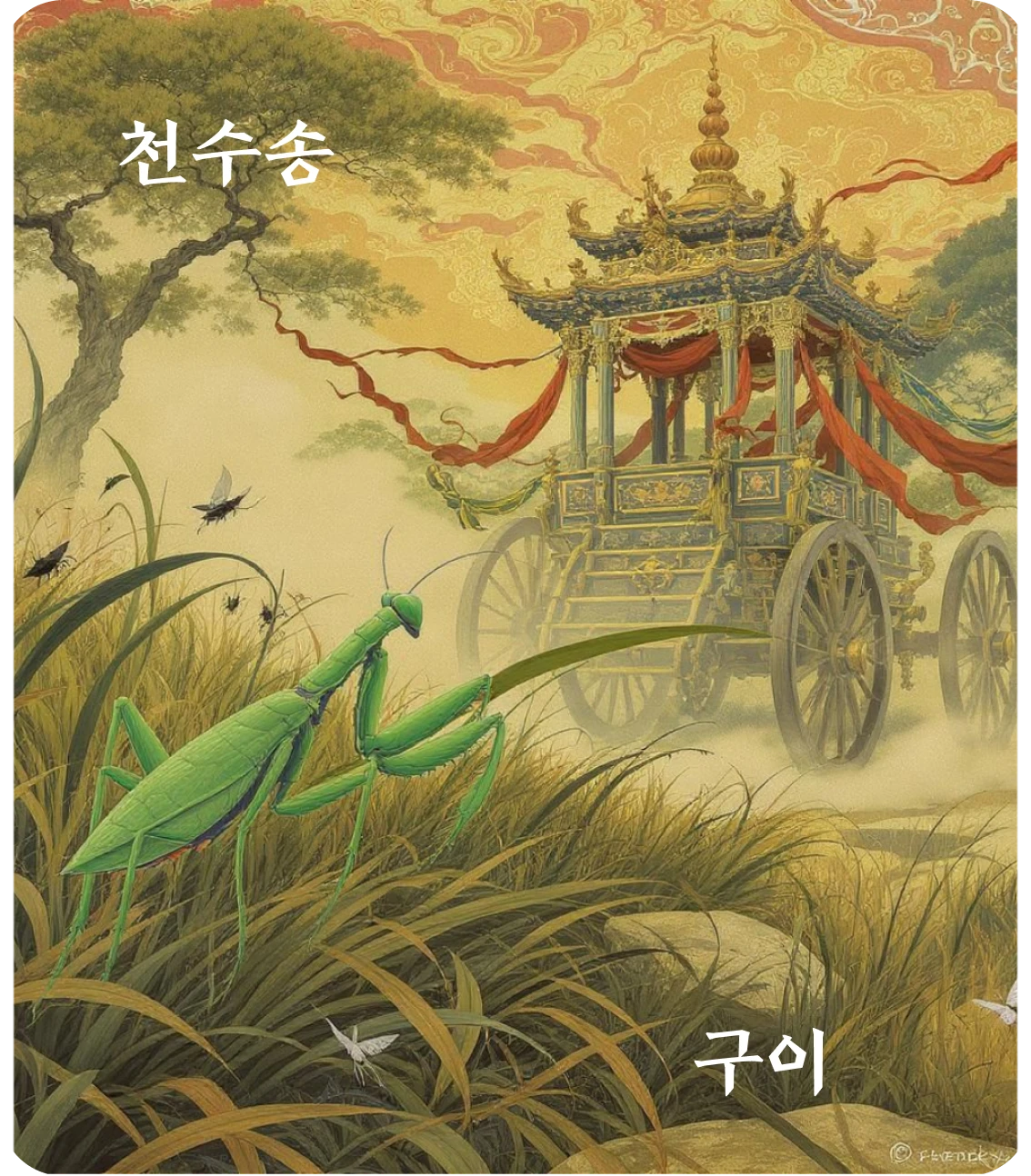
As the card depicts — a mantis raises its forelegs against a great chariot, a vivid image of futile resistance against overwhelming force. When you see this line, it reminds you that recognizing when you are outmatched and retreating strategically is not cowardice but wisdom. Sometimes the bravest thing to do is to acknowledge that you cannot win this battle.

Yilore Reading

The Mantis Before the Cart

Hexagram 6 Conflict — Nine in the Second Card Front
Hexagram 6 Conflict — Nine in the Second Card Back

Yilore interprets the Nine in the Second of the Conflict hexagram as "The Mantis Before the Cart." When this card appears, it delivers a powerful message about the wisdom of knowing your limitations.

The card depicts the classic image of a praying mantis raising its forelegs against an approaching chariot — brave but utterly futile. This is what happens when you fight a battle where the odds are hopelessly stacked against you. The mantis has courage but not the power to match. The chariot will roll on regardless.

The profound wisdom of this line lies in the phrase "returns home and retreats." There is no shame in recognizing that you are outmatched. True courage sometimes means walking away from a fight you cannot win. And notice the beautiful detail: "three hundred households remain free of blame." Your retreat doesn't just save you — it protects everyone who depends on you. The person who retreats wisely is not a coward but a guardian.

Divination Insights

The Nine in the Second line in divination carries the core theme: "Recognize the power imbalance, retreat wisely, and protect those around you." You are currently in a disadvantageous position in a conflict. The overall tone: strategic withdrawal is not defeat — it is the wisest path forward.

Career

In career matters, the Nine in the Second indicates you are locked in a power struggle you cannot win — perhaps against a superior or a much larger competitor. Fighting on will only waste resources and harm your reputation. The wisest course is to step back, accept the situation, return to your own strengths, and focus on building your foundation. Sometimes retreating to a smaller stage where you can thrive is far better than fighting a losing battle on a grand one.

Relationships

In relationships, the Nine in the Second suggests a power imbalance in the partnership. You may feel overwhelmed or outmatched — perhaps your partner is more dominant, or external circumstances (family, finances) make the relationship feel like an uphill battle. Rather than fighting to change someone who doesn't want to change, it may be wiser to step back and protect your emotional wellbeing. Sometimes love means knowing when to retreat.

Wealth

Financially, this line warns against competing with those who have far greater resources. If you are in a business dispute with a much larger entity, or investing against market forces you cannot control, cut your losses and retreat. The three hundred households being "free of blame" reminds you that your financial decisions affect not just you but your dependents. Protect what you have rather than risking everything to win.

Health

Health-wise, the Nine in the Second warns against the stress of fighting battles you cannot win. Chronic stress from futile struggles damages your cardiovascular system, disrupts sleep, and weakens your immune response. The prescription is clear: step back from the conflict, seek a quieter environment, and allow your body to recover. Retreat is not giving up — it is healing.

이라 앱 아이콘

Get the Yilore app

Full charts, daily hexagrams, and deeper AI readings on your phone.

App Store

FAQ

What does 'One cannot engage in conflict, returns home and retreats' mean?

It means recognizing that you are in a losing position — outmatched in power, resources, or moral standing — and wisely choosing to withdraw rather than fight on. "Returns home and retreats" is not about cowardice but strategic wisdom. By stepping back to your own domain, you preserve your strength and protect those around you (the "three hundred households"). The core teaching: knowing when you cannot win is itself a form of victory.

I drew Nine in the Second — should I give up on my goal?

Not necessarily give up forever, but definitely step back for now. The line doesn't say the goal is wrong — it says this particular battle cannot be won under current conditions. Retreat, regroup, build your strength, and wait for better timing. The three hundred households being safe means your retreat protects your resources and relationships for future opportunities.

How does the Mantis Before the Cart apply to modern life?

In modern terms, this is about picking your battles wisely. Don't fight a corporation with unlimited legal funds if you're an individual. Don't try to out-argue a powerful superior in a public meeting. Don't compete head-to-head with someone who has vastly more resources. Instead, retreat to where your strengths lie, build your base, and choose engagements where you actually have a chance of winning.