Hexagram 7 The Army — Six in the Fourth Line Explained

Six in the Fourth: The army retreats. No blame. A strategic withdrawal preserves strength for future campaigns — knowing when to retreat is true military wisdom.

Yao Position Overview

Yao Text

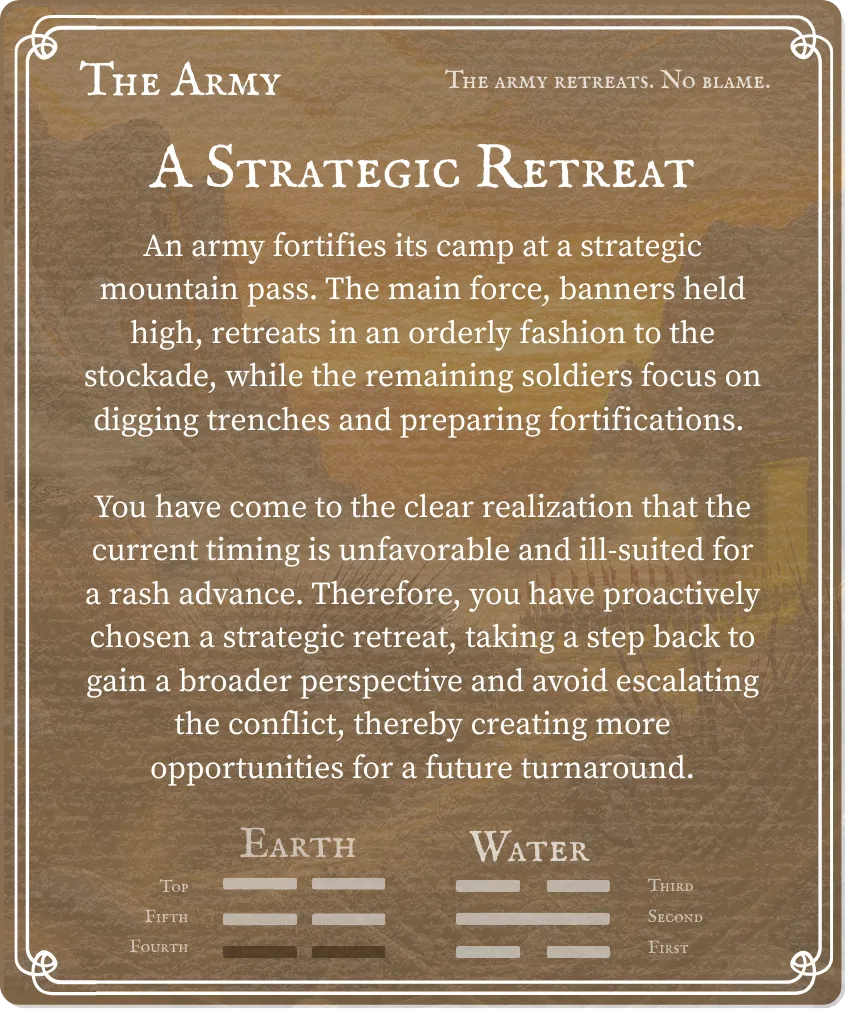
Six in the Fourth: The army retreats. No blame.

Tuan Commentary

The Tuan Commentary says: The Army means the masses. Perseverance means correctness. He who can lead the masses with correctness may be king. The strong line gains the center and is responded to; going forth in the midst of danger and acting obediently — with this one may poison all under heaven, and the people follow. Good fortune — what blame could there be?

Hexagram 7 The Army — Six in the Fourth Line Card

The Six in the Fourth is the fourth line of The Army hexagram — a yin line in a yin position, appropriately placed. 'The army retreats' indicates a deliberate withdrawal, and 'no blame' confirms this is not a defeat but a wise tactical decision. Sometimes the best move is to pull back.

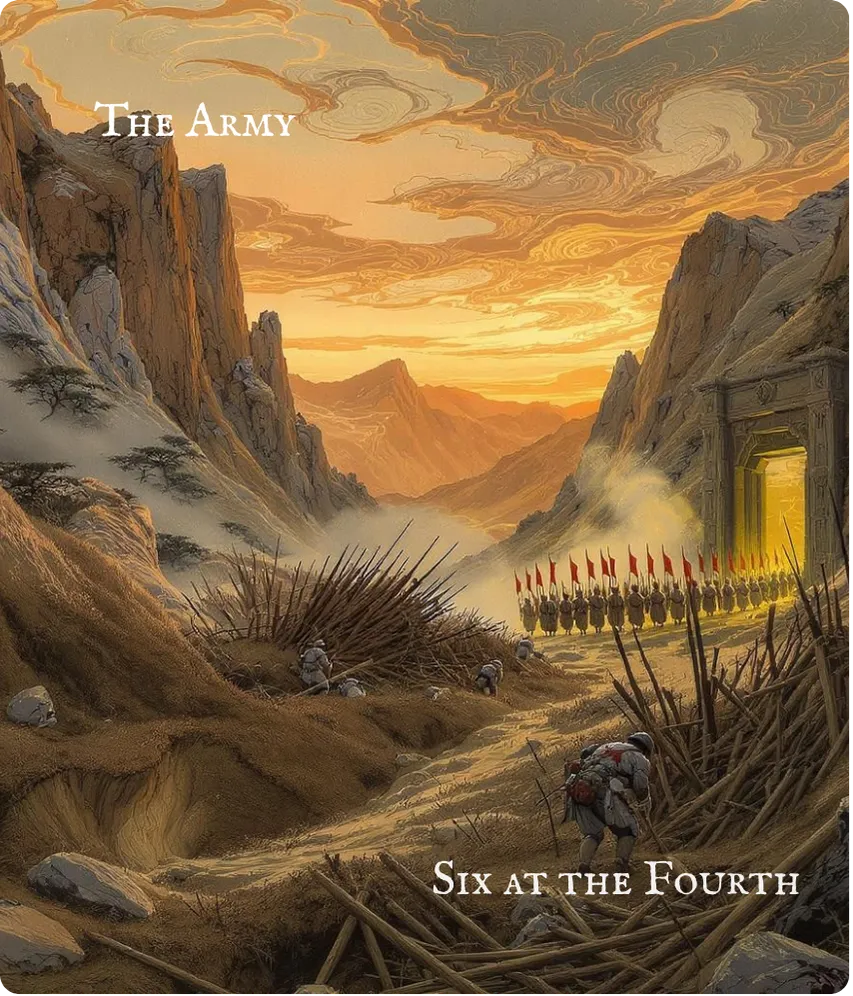
As the card depicts — an army in orderly retreat, banners furled but spirits intact. They are not fleeing in panic but withdrawing strategically to a better position. This line validates the courage required to retreat — it takes more wisdom to step back than to charge forward blindly.

Yilore Reading

Strategic Retreat

Hexagram 7 The Army — Six in the Fourth Card Front
Hexagram 7 The Army — Six in the Fourth Card Back

Yilore interprets the Six in the Fourth of The Army as 'Strategic Retreat.' This card carries a profound message about the wisdom and courage required to step back.

The card depicts an army withdrawing in good order — not in panic or defeat, but with discipline and purpose. Their banners are lowered but their spirits are not broken. They retreat to fight another day.

The card's deepest wisdom is that retreat requires more courage than advance. Anyone can charge forward driven by adrenaline or ego. But recognizing that the current battle cannot be won, and having the discipline to withdraw before losses mount — this is the mark of a true strategist. In your life, if circumstances demand a step back, take it with grace and confidence. The 'no blame' assures you that this is not failure but wisdom.


Divination Insights

The Six in the Fourth in divination carries the reassuring message: 'retreat is not defeat.' You may need to pull back from a current endeavor, and this is not only acceptable but wise.

Career

In career matters, the Six in the Fourth gives you explicit permission to step back. Perhaps a project is overextended, a negotiation has stalled, or a competition cannot be won under current conditions. Retreating now preserves your resources and reputation for future opportunities. There is no shame in a tactical withdrawal — the best military commanders have always known when to pull back.

Relationships

In relationships, this line suggests giving your partner space or stepping back from a heated situation. Sometimes the most loving thing you can do is create distance, allowing emotions to cool and perspective to return. A temporary retreat can save a relationship that continued confrontation would destroy.

Wealth

Financially, the Six in the Fourth advises cutting losses on underperforming investments or pulling back from risky ventures. Don't throw good money after bad. A strategic financial retreat — selling at a small loss rather than waiting for a larger one — is sound financial management, not failure.

Health

Health-wise, this line counsels rest and recovery. If you have been pushing yourself too hard, your body is telling you to retreat and recuperate. Scale back your activities, take time off, and allow your body to restore its reserves. Pushing forward when depleted only leads to breakdown.

易羅 アプリのアイコン

Get the Yilore app

Full charts, daily hexagrams, and deeper AI readings on your phone.

App Store

FAQ

Is retreating a sign of weakness?

Absolutely not. The hexagram explicitly says 'no blame' for this retreat. In military strategy, the ability to retreat in good order is considered a high art. The Six in the Fourth represents a leader wise enough to recognize unfavorable conditions and courageous enough to act on that recognition. Stubbornly refusing to retreat when circumstances demand it is not bravery — it is foolishness.

When should I advance versus retreat?

The Army hexagram provides a complete guide: advance with proper discipline (Line 1), under competent leadership (Line 2), and for righteous causes (Line 5). Retreat when facing superior force or unfavorable conditions (Line 4). The key factor is honest assessment of the situation — not what you wish were true, but what actually is.

How do I retreat strategically rather than just giving up?

A strategic retreat has three components: (1) it is deliberate and planned, not panicked; (2) it preserves your resources and relationships for future use; (3) it repositions you for better opportunities. The difference between quitting and strategic retreat is intentionality — you are not abandoning your goals, you are choosing a better path to reach them.