Hexagram 7 The Army — Six in the Fifth Line Explained

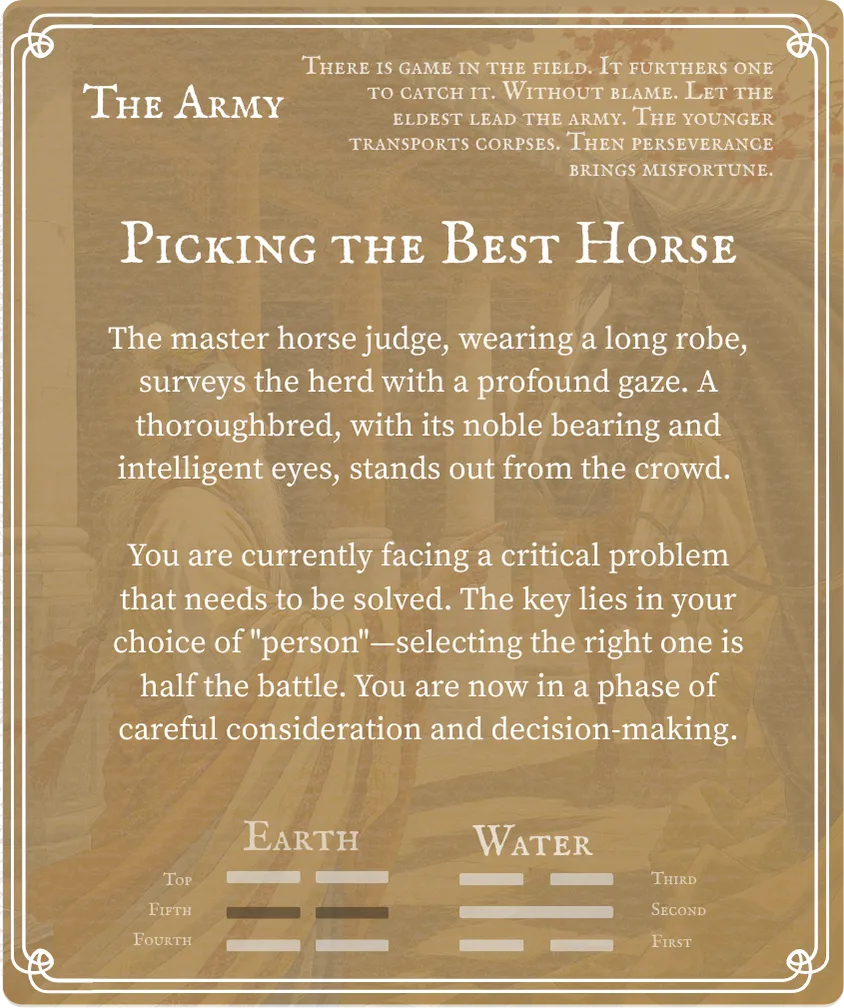
Six in the Fifth: There is game in the field. It furthers one to catch it. Let the eldest lead the army. If the younger transports corpses, perseverance brings misfortune.

Yao Position Overview

Yao Text

Six in the Fifth: There is game in the field. It furthers one to catch it. No blame. Let the eldest lead the army. If the younger transports corpses, then perseverance brings misfortune.

Tuan Commentary

The Tuan Commentary says: The Army means the masses. Perseverance means correctness. He who can lead the masses with correctness may be king. The strong line gains the center and is responded to; going forth in the midst of danger and acting obediently — with this one may poison all under heaven, and the people follow. Good fortune — what blame could there be?

Hexagram 7 The Army — Six in the Fifth Line Card

The Six in the Fifth occupies the ruler's position in The Army hexagram. 'Game in the field' means there is a legitimate reason to act — a genuine threat or opportunity. 'Let the eldest lead the army' is the critical instruction: appoint the most experienced, capable person to command. 'If the younger transports corpses, perseverance brings misfortune' warns that appointing the wrong person — someone inexperienced or unqualified — leads to disaster even when the cause is just.

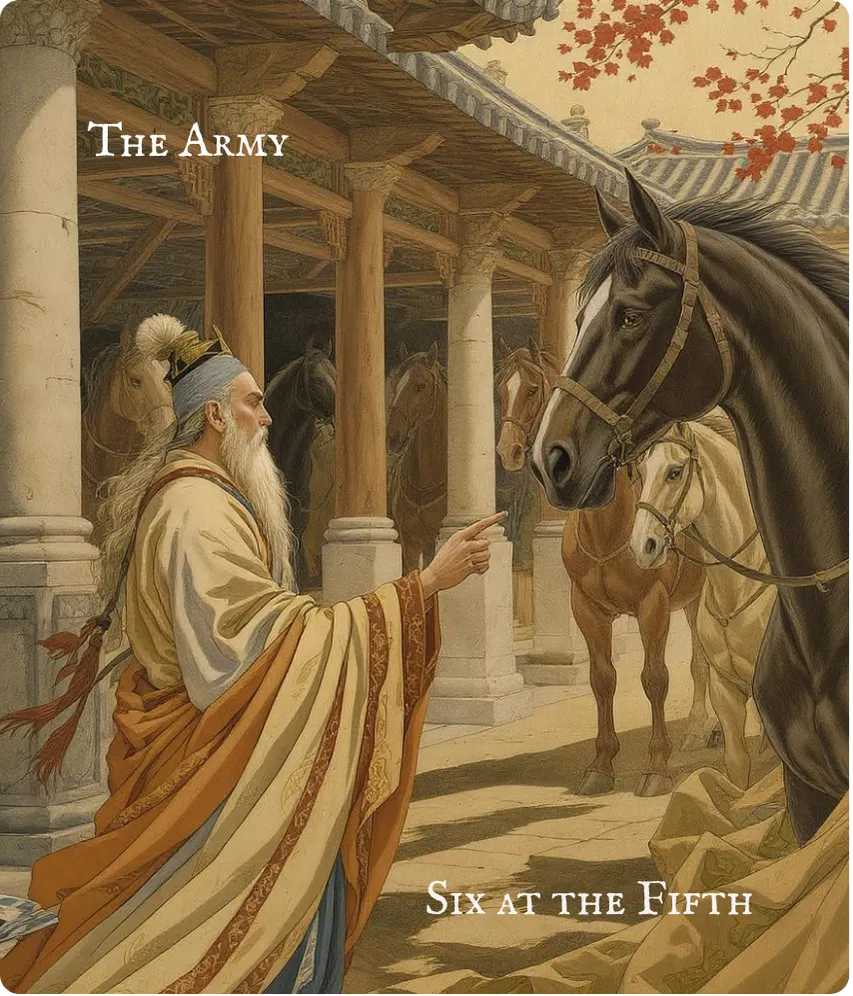
As the card depicts — a ruler sits in council, weighing the merits of potential commanders. The decision of who to appoint is more important than the decision of whether to act. Even a just war is lost if led by an incompetent general.

Yilore Reading

Appoint the Right Commander

Hexagram 7 The Army — Six in the Fifth Card Front
Hexagram 7 The Army — Six in the Fifth Card Back

Yilore interprets the Six in the Fifth of The Army as 'Appoint the Right Commander.' This card carries the vital message that the most critical decision in any campaign is not what to do but who should lead the effort.

The card shows a moment of decision — the ruler must choose between candidates for command. The 'eldest son' represents experience, proven ability, and earned wisdom. The 'younger son' represents enthusiasm without experience, ambition without competence.

The card teaches that good intentions and a just cause are not enough. The best strategy in the world fails if executed by the wrong person. Before you act on any major initiative, ask: 'Is the right person in charge?' If the answer is no, fixing the leadership is more urgent than any other action.


Divination Insights

The Six in the Fifth in divination emphasizes the critical importance of choosing the right person for the job. There is genuine cause for action, but success or failure hinges entirely on who leads the effort.

Career

In career matters, the Six in the Fifth calls for wise delegation. If you are in a position of authority, your most important job right now is identifying and appointing the best person to lead a critical initiative. Favor experience and proven competence over seniority, nepotism, or political considerations. The wrong appointment will doom even the most promising project.

Relationships

In relationships, this line advises that when facing a challenge together, the partner with the most relevant expertise or emotional strength should take the lead. Don't let ego or traditional roles determine who leads — let competence decide. If financial decisions are needed, the more financially savvy partner should lead. If emotional healing is required, the more emotionally intelligent one should take the helm.

Wealth

Financially, the Six in the Fifth is about choosing the right financial advisor, investment manager, or business partner. The difference between financial success and disaster often comes down to who is making the decisions. Vet credentials thoroughly, check track records, and ensure the person managing your money has genuine expertise.

Health

Health-wise, this line emphasizes choosing the right healthcare provider. When facing a health challenge, seek out the most qualified specialist — not the most convenient or cheapest option. The 'eldest son' in health terms is the experienced, proven practitioner. An unqualified practitioner, however well-meaning, can cause more harm than good.

易羅 アプリのアイコン

Get the Yilore app

Full charts, daily hexagrams, and deeper AI readings on your phone.

App Store

FAQ

What does 'let the eldest lead the army' mean?

The 'eldest' represents the most experienced, competent, and mature person available — not necessarily the oldest in age, but the wisest in judgment. In modern terms: appoint leaders based on proven competence and earned wisdom, not on seniority, nepotism, or political connections. The entire success or failure of an endeavor can hinge on this single decision.

Why does the line warn about 'the younger transporting corpses'?

The 'younger' represents someone unqualified for the role — enthusiastic perhaps, but lacking the experience and judgment needed. 'Transporting corpses' means the army has been defeated under this person's command. The warning is stark: appointing an unqualified leader, even for a just cause, leads directly to disaster. Good intentions cannot compensate for incompetence in leadership.

How do I identify the 'eldest son' for my situation?

Look for someone with: (1) proven track record in similar situations, (2) the respect and trust of those who will follow, (3) calm judgment under pressure, and (4) genuine competence in the relevant domain. Ignore titles, connections, and charisma — focus on demonstrated results and earned trust.